
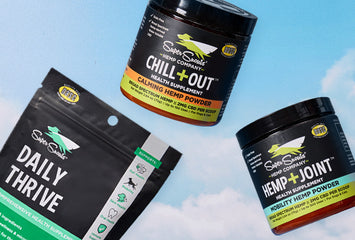

Schipperkes are one of the sturdier small breeds we write about, so the honest answer to "what supplements does my Schip need" is: fewer than you think, chosen better. The documented priorities are kneecap and hip support, a gut that keeps pace with this breed's relentless motor, and healthy weight through a long 12–14 year lifespan.
More ingredients doesn't mean better results. That's true for every breed, and doubly true for a 12-pound dog.
Meet the little captain
The Schipperke earned its keep on Belgian canal barges — part ratter, part watchdog, part ship's alarm system. The name is often translated as "little captain," and the job description still fits. Expect 10–16 pounds of jet-black, fox-faced confidence with a thick double coat, no tail to speak of, and an opinion about everything that moves.
Per the American Kennel Club, Schips are curious, quick, and famously mischievous. They were bred to work all day, and modern couch life doesn't switch that off. This matters for supplements more than you'd think: an under-exercised Schipperke becomes an overweight one, and extra weight is the fastest route to the joint problems we're about to cover.
Which joint issues are documented in Schipperkes?
Two show up repeatedly in the breed literature. Patellar luxation — the small-dog kneecap slip — is the big one; responsible breeders screen for it. Legg-Calvé-Perthes disease, where blood supply to the head of the femur degenerates in young dogs, is the second. VCA Animal Hospitals describes the telltale luxation sign well: a sudden skip in the rear gait, a stretched-out kick, then business as usual.
Diagnosis and grading are vet territory. Nutrition is yours. Cartilage under mechanical stress consumes glucosamine and chondroitin, and inflammation-modulating omega-3s help the surrounding tissue cope with load. Rather than a multi-ingredient tablet where each component gets a token milligram, we prefer a single whole food that carries all of it: New Zealand green-lipped mussel. It's the only ingredient in Joint Power, which means a Schipperke-sized scoop delivers exactly what the label says and nothing you didn't ask for.
One more joint note: this breed loves vertical life — sofa backs, window ledges, your shoulders if permitted. Repetitive jumping onto hard floors adds up. Rugs and ramps are boring advice that works.
The Schipperke gut: fast dog, faster metabolism
Schips burn hot. A high-drive small dog with a quick metabolism tends to broadcast stress and dietary changes straight through the GI tract — gas after a new treat, soft stool after an exciting weekend, the occasional mystery gurgle at 3 a.m.
Two tools cover most of it. For episodic gas, bloating sensations, and general stomach upset, a combination of probiotics and soothing botanicals helps rebalance things; that's the design brief behind our G.I. Balance. For plain-and-simple loose stool — the kind that follows a raided compost bin — soluble fiber from pumpkin and apple pectin absorbs excess water and gets stool back to spec, which is why Firm Up! outsells everything else we make.
Know the escalation line: vomiting with lethargy, blood in stool, refusing food for more than a day, or diarrhea beyond 48 hours means your veterinarian needs to see the dog, not a supplement label.
Weight and thyroid: the quiet variables
Hypothyroidism is documented in Schipperkes, and its early signs — weight gain, dull coat, low energy — are easy to misread as normal aging. No supplement addresses a hormone deficiency; it's diagnosed with bloodwork and managed with prescription medication. We flag it because owners sometimes reach for coat supplements when the real problem is endocrine. If your Schip's coat has gone flat and the waistline is expanding despite measured meals, book the blood panel before you buy anything from us.
On weight generally: a Schipperke should have a visible tuck and ribs you can feel through that dense coat. Every extra pound rides directly on the kneecaps you're trying to protect.
What about that famous double coat?
Good news — the Schipperke coat is mostly self-maintaining and the breed isn't flagged as unusually allergy-prone. Barring an individual sensitivity (your vet can work that up), we don't think most Schips need a dedicated skin supplement. The omega-3s in green-lipped mussel already lend the coat a hand as a side effect of joint support. This is rule one of our philosophy: when a breed doesn't have a documented need, skip the product. Your money is better spent on the categories above.
Building the routine, step by step
- Foundation: green-lipped mussel daily from young adulthood — cheap insurance for documented knee and hip risk.
- Situational: pumpkin-based fiber for loose-stool episodes; a probiotic-botanical blend if gas and gurgling are your dog's signature move.
- Skip for now: calming aids (Schips are alert, not anxious, as a rule), dedicated skin formulas, and anything with a 14-ingredient label.
- Non-negotiable: annual exams with knee checks, and a conversation with your vet before starting anything new — especially if your Schipperke is a puppy, pregnant, or on medication.
Schipperke FAQ
Do Schipperkes really need joint supplements if they seem fine?
A graded luxating patella can be silent for years while cartilage quietly wears. Starting whole-food joint support early is a low-risk hedge, but ask your veterinarian to assess the knees first so you know what you're supporting.
What's the best way to handle my Schipperke's gas?
Start with an audit: sudden food changes, rich treats, and speed-eating are the usual suspects. A slow-feeder bowl plus a probiotic blend resolves a surprising share of cases. Persistent gas with weight loss or appetite change warrants a vet workup.
Is pumpkin safe for a dog this small?
Yes — plain pumpkin fiber is well tolerated in small breeds at appropriately scaled servings. Follow label directions by weight, and confirm with your veterinary team if your dog has kidney disease or diabetes, since fiber changes can matter in those cases.
My Schipperke is slowing down at age nine. Which supplement helps?
Maybe none — first rule out pain, thyroid trouble, and heart issues with your vet. If the exam is clean, joint support and omega-3s are reasonable, and senior cognition blends are worth discussing at that appointment.
Our closing take
The Schipperke is proof that small doesn't mean fragile. Protect the knees before they wobble, keep two gut tools within reach, watch the waistline, and resist the urge to supplement problems this breed doesn't have. And before any of it, loop in your veterinarian — they know your little captain better than any blog can.
Educational content only, not medical advice. Your vet should green-light any new supplement, dose, or diet change for your Schipperke.