
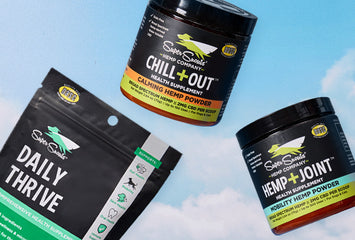

There's no one-size-fits-all wellness routine, and the Samoyed is a clean example of why. The Samoyed was developed by the Samoyedic people of Siberia as a herding, hunting, and sledding breed. The thick white coat and upturned mouth — the 'Sammy smile' — are both cold-climate adaptations. Those working origins still show up in the dog on your couch — in build, metabolism, and temperament — and a supplement routine that ignores them misses the dog.
The pet supplement industry rewards complexity for its own sake. The reality for a Samoyed is simpler — a narrow set of ingredients with real research behind them, dosed to the dog. The section below walks through each category that matters.
Why Samoyeds need a tailored supplement plan
Medium breeds like the Samoyed, typically 35-65 lbs at adulthood, sit in a sweet spot for lifespan — but breed-specific risks still show up, and generic formulas miss them. The dogs that thrive into their teens are almost always the ones whose owners planned for the breed's known weaknesses from the start. On top of the physical profile, the Samoyed is a Siberian working spitz with a famously friendly temperament — a disposition that shapes how stress, exercise load, and recovery all play out day to day.
Framed correctly, none of this is worrying information. The typical Samoyed has a 12-14 years lifespan and plenty of good years in them. The supplement choices that help are the ones aimed at what the breed is actually dealing with, not what the average dog might theoretically benefit from.
For a Samoyed, three categories cover most of where supplements actually earn their keep: joint and mobility, skin and coat, and calming support.
Joint and mobility: glucosamine, chondroitin, and green-lipped mussel
Joint health matters for Samoyeds, even if the breed isn't in the highest risk tier. Hip dysplasia is tracked, and the breed is prone to a genetic glomerular kidney disease worth knowing about. The most common mistake owners make is waiting for visible stiffness before starting support — by then, the underlying wear has usually been developing for years.
If you filter canine joint science down to the ingredients with the strongest evidence, three remain: glucosamine, chondroitin sulfate, and MSM (methylsulfonylmethane). Glucosamine is cartilage raw material. Chondroitin sulfate lets cartilage hold water and absorb compression. MSM provides the sulfur bonds that keep connective tissue intact. A joint formula needs all three to do its job.
Within the joint category, green-lipped mussel is the rare ingredient that earns its spot on multiple mechanisms at once. It's a concentrated natural source of glucosamine and chondroitin and provides the unusual omega-3 ETA, supporting a balanced inflammatory response. Peer-reviewed studies over 8 to 12 weeks have produced measurable joint-comfort gains. That single-ingredient coverage is a real advantage for a Samoyed.
That's why Joint Power is formulated around one input and nothing else: New Zealand green-lipped mussel, cold-processed and lipid-stabilized to protect the actives. No synthetic glucosamine. No fillers. The food-topper format is the one most owners can actually keep up with for a 65 lbs dog.
For a Samoyed, starting joint support by age four or five is a reasonable default. High-drive or working-line dogs benefit from earlier intervention.
Skin and coat: omega-3s, quercetin, and functional mushrooms
The Samoyed's double coat is a real advantage in many climates — and a liability in others. The thick, white double coat needs regular brushing; skin fold dermatitis in older dogs and hot spots in summer are both common.
On canine skin, a short list of ingredients does the heaviest lifting. EPA and DHA omega-3 fatty acids support the skin barrier and tamp down the pathways that drive itch. Quercetin, a plant flavonoid, has research behind its support for a normal histamine response — hence the 'nature's Benadryl' nickname. Beta-glucans from functional mushrooms (reishi, turkey tail, chaga, shiitake, lion's mane, maitake, cordyceps) appear to modulate the overactive immune activity that underlies 'seasonal allergies.'
The product we reach for here is Super Shrooms — a seven-mushroom, one-inactive-ingredient formula delivered as a food topper. It works on skin support and general immune modulation simultaneously, which makes it a practical daily choice for Samoyeds with seasonal allergy flares.
Before reaching for a skin supplement, rule out the obvious: food allergies, environmental triggers, and fleas. Skin problems are often downstream of something upstream — and no topical or supplement fully fixes a mismatched diet. Once the basics are handled, omegas and mushroom-derived beta-glucans tend to give most dogs a visible lift within a few weeks.
Calming: L-tryptophan, chamomile, and the GABA pathway
Samoyeds are athletic first, affectionate second — the stress signature reflects that. Samoyeds are vocal and social — isolation creates real stress behaviors.
Calming formulas don't sedate — the ingredients that actually work target specific nervous-system pathways. L-tryptophan supplies the precursor to serotonin. L-theanine shifts brain activity toward the alpha-wave pattern associated with calm alertness. Chamomile and passionflower are long-established mild-anxiety supports with some dog-specific evidence. Hemp-derived compounds are seeing more research attention for situational stress.
Chill + Out is built for predictable stress events — fireworks, thunderstorms, vet visits, travel. The chew brings together L-tryptophan, chamomile, passionflower, and broad-spectrum hemp (THC removed to non-detectable levels) and works best 30 to 60 minutes before the trigger. For households that prefer to skip hemp, routine consistency, structured exercise, and desensitization training handle most of what's needed for Samoyeds.
Building a realistic routine
A stacked-high supplement bowl isn't realistic, and isn't required. For a healthy adult Samoyed, a practical starter routine comes down to two products: a daily joint supplement built on green-lipped mussel (effectively non-optional for most breeds as they age) and a mushroom blend for skin and allergy support. Calming chews stay in reserve for the predictable stress events: fireworks, thunderstorms, vet days.
One more thing worth saying out loud: the routine above is the Samoyed's routine, not a universal one. It targets what the breed is demonstrably at elevated risk for — joint and mobility, skin and coat, and calming support — and stops there. Adding products outside that list doesn't produce better outcomes; it produces more work for the owner and more cost for the same result. The goal is fewer daily supplements chosen deliberately, not more supplements hedging across categories the breed doesn't face. That's the difference between a supplement plan and a supplement habit.
Two things matter. First, dose correctly. Every product in this guide is dosed by body weight, and owners routinely err low — for a Samoyed at 35-65 lbs, that means the full weight-matched amount, not a generic pinch. Second, supplements aren't a substitute for the basics. Diet, weight management, exercise, and routine vet care carry the bulk of the work. Supplements are precision additions on top. And most of these ingredients compound over weeks, not days — consistency matters more than any single dose.
A solid Samoyed supplement plan is more surgical than comprehensive. It's short, it's aimed at the breed's actual risk exposures, and it pairs those exposures with ingredients that have real evidence behind them. Nothing else earns a place.