

Broad pet-wellness advice rarely lines up with the Havanese in practice. The Havanese is Cuba's national dog, descended from Bichon-type breeds brought by Spanish colonists. The breed nearly went extinct after the Cuban revolution and was reconstructed from a handful of dogs. The way the breed was shaped — what it was bred to do and under what conditions — still drives the modern health profile, and that's where a useful supplement plan begins.
A useful supplement routine for a Havanese is shorter than the shelf would suggest. Evidence points to a small number of ingredients that actually deliver, and dosing them to the dog matters more than stacking more products. Category-by-category, here's how that looks.
Why Havaneses need a tailored supplement plan
Toy breeds like the Havanese, weighing just 7-13 lbs as adults, don't get a free pass on health risks. Their profile is just different — cartilage, dental, and metabolic concerns often dominate. Toy dogs also live longer on average, which means more time for small issues to compound into real ones. On top of the physical profile, the Havanese is a cheerful toy breed with strong companion instincts — a disposition that shapes how stress, exercise load, and recovery all play out day to day.
Take this as information to plan around, not to worry about. A healthy Havanese has a 14-16 years lifespan to work with. The supplement moves that make a difference are the ones aligned with the breed's specific profile rather than a blanket multi-benefit approach.
The supplement conversation for a Havanese narrows down to three real areas of need: joint and mobility, skin and coat, and calming support.
Joint and mobility: glucosamine, chondroitin, and green-lipped mussel
Joint health matters for Havaneses, even if the breed isn't in the highest risk tier. Patellar luxation and Legg-Calvé-Perthes disease are both documented. The most common mistake owners make is waiting for visible stiffness before starting support — by then, the underlying wear has usually been developing for years.
Three ingredients anchor the evidence base for canine joint care: glucosamine, chondroitin sulfate, and MSM (methylsulfonylmethane). Glucosamine contributes to the raw material of cartilage. Chondroitin sulfate supports cartilage's ability to resist wear and compression. MSM supplies the sulfur that connective tissue requires. Everything else a joint formula does is layered on top of these three.
Among single-ingredient joint inputs for dogs, green-lipped mussel (GLM) stands out. It delivers glucosamine and chondroitin in biologically meaningful amounts and carries a distinctive omega-3 profile — including ETA, which isn't a feature of standard fish oil — that supports a balanced inflammatory response. 8-to-12-week canine trials have documented joint-comfort improvements in supplemented dogs. A Havanese gets unusually broad coverage from one input.
We built Joint Power around exactly that insight. It's 100% New Zealand green-lipped mussel, cold-processed and lipid-stabilized — no synthetic glucosamine additives, no bulking fillers. The format is a food topper rather than a chew, which makes correct dosing easier for a 13 lbs dog.
Toy breeds like the Havanese rarely show joint issues early, but when issues appear (most commonly patellar luxation), they compound. Starting joint support by age four or five is a reasonable default.
Skin and coat: omega-3s, quercetin, and functional mushrooms
Long-coated breeds like the Havanese need both coat maintenance and real skin support — the two problems are different. The silky double coat needs regular grooming and tear staining is common. Chronic otitis affects the breed at above-average rates.
Research on canine skin support keeps returning to the same short list. Omega-3 fatty acids — EPA and DHA specifically — strengthen the skin barrier and calm itch-driving pathways. Quercetin is a plant flavonoid with growing research behind a normal histamine response (owners often encounter it as 'nature's Benadryl'). Beta-glucans from medicinal mushrooms — reishi, turkey tail, chaga, shiitake, lion's mane, maitake, cordyceps — modulate the overactive immune patterns that usually underlie 'seasonal allergies.'
Super Shrooms is the seven-mushroom blend we built for this. One inactive ingredient. It goes on top of food and does two jobs at once — skin support plus broader immune modulation — which makes it an efficient daily choice for Havaneses whose allergies spike seasonally.
Before a skin supplement earns a place in the routine, the upstream variables need to be settled: diet, environmental exposures, and fleas. Those factors drive most skin complaints, and no supplement out-performs a diet mismatch or a missed flea dose. Once those are handled, omega-3s and mushroom-derived beta-glucans are the two ingredient categories that most reliably turn skin around inside a few weeks.
Calming: L-tryptophan, chamomile, and the GABA pathway
Havaneses are companion-bred, which means their stress is usually relationship-driven. Havanese are generally social but can become clingy and anxious in solo households.
The ingredients in a useful calming formula support specific nervous-system targets rather than sedating. L-tryptophan is the amino-acid precursor to serotonin. L-theanine encourages alpha-wave activity tied to calm alertness. Chamomile and passionflower have long history of use for mild anxiety, supported by small studies in dogs. Hemp-derived compounds — broad-spectrum in particular — have growing research for situational stress.
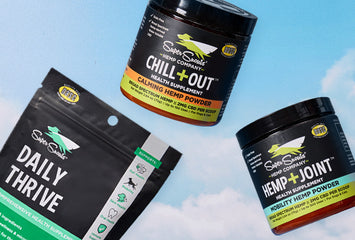
Chill + Out targets the predictable stressors: fireworks, thunderstorms, vet days, travel. The chew combines L-tryptophan, chamomile, passionflower, and broad-spectrum hemp (THC removed to non-detectable levels) and is meant to go in 30 to 60 minutes before the trigger. If hemp doesn't fit your household, structured exercise, routine consistency, and desensitization training handle the bulk of the work for Havaneses.
Building a realistic routine
A sustainable supplement routine isn't a loaded bowl of powders and chews. For a healthy adult Havanese, it typically comes down to two products: a daily joint supplement built on green-lipped mussel (effectively non-optional for most breeds as they age) and a mushroom blend for skin and allergy support. A calming product is situational, not daily — pull it out for fireworks, thunderstorms, and vet visits.
Scope matters here. The routine above is specific to the Havanese — calibrated to joint and mobility, skin and coat, and calming support and stopping short of categories the breed isn't documented to be at elevated risk for. Extending the routine past that point costs more, eats into adherence, and doesn't produce better outcomes. A concise plan that matches the breed's actual risks is the goal, not a broader plan that hedges.
Two rules tend to determine whether the routine pays off. First: dose to the dog's actual weight. A Havanese at 7-13 lbs needs the full weight-matched amount; underdosing is the most common issue in real-world use. Second: supplements don't replace the fundamentals. Diet, a healthy body weight, appropriate exercise, and routine vet care are non-negotiable. Everything in this guide goes on top. And give it time — four to eight weeks is usually when the full effect shows up.
Built well, a Havanese's supplement routine isn't a collection of products — it's a set of targeted matches between real breed risks and the ingredients that address them. That's what earns a slot on the label and a place on the food bowl.