
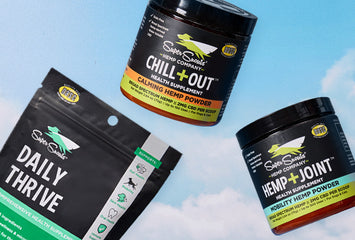

A useful supplement conversation about the English Bulldog starts with the breed, not the product. The English Bulldog was originally bred for bull-baiting — a brutal sport banned in 1835 — and was then remade as a companion breed. The modern Bulldog's compact build comes with real respiratory and orthopedic challenges. That background is what makes sense of the breed's adult risk profile, and it's the filter that separates supplements that matter from supplements that don't.
Pet supplements are easy to overthink. The formulas that matter for a English Bulldog are built around a small set of ingredients with real clinical backing behind them. Here's how that breaks down, one category at a time.
Why English Bulldogs need a tailored supplement plan
Medium breeds like the English Bulldog, typically 40-55 lbs at adulthood, sit in a sweet spot for lifespan — but breed-specific risks still show up, and generic formulas miss them. The dogs that thrive into their teens are almost always the ones whose owners planned for the breed's known weaknesses from the start. On top of the physical profile, the English Bulldog is a brachycephalic companion breed with complex needs — a disposition that shapes how stress, exercise load, and recovery all play out day to day.
This isn't a doom list. A English Bulldog typically lives across a 8-10 years span in good condition when well cared for. The supplements that actually contribute to that outcome are the ones built around real breed risks — not a generic pantry approach.
Three categories emerge as the ones a English Bulldog's supplement plan actually hinges on: joint and mobility, digestive health, and skin and coat.
Joint and mobility: glucosamine, chondroitin, and green-lipped mussel
Joint issues are one of the most frequently flagged concerns in the English Bulldog. Hip and elbow dysplasia, patellar luxation, and degenerative spinal conditions are all elevated in the breed. Combine that genetic predisposition with the breed's build and activity level, and joint support stops being optional.
The evidence for canine joint support rests on three ingredients: glucosamine, chondroitin sulfate, and MSM (methylsulfonylmethane). Glucosamine feeds into the cartilage matrix itself. Chondroitin sulfate keeps cartilage hydrated and cushioned under load. MSM contributes sulfur to connective-tissue structure. A joint formula that skips any of the three is missing part of the picture.
Green-lipped mussel (GLM) pulls double duty. It's one of the richest natural sources of both glucosamine and chondroitin, and it delivers omega-3 fatty acids — including ETA, which is hard to get elsewhere — that support a balanced inflammatory response. Clinical work over 8 to 12 weeks has documented measurable improvements in joint comfort in supplemented dogs. For a breed the size of the English Bulldog, that single-ingredient efficiency matters.
The formula behind Joint Power is intentionally narrow: New Zealand green-lipped mussel, cold-processed and lipid-stabilized to keep the omega-3 profile intact. No synthetic glucosamine, no fillers. Sprinkled on food, it's the format owners actually stick with — especially for a 55 lbs dog who isn't keen on pills.
For a English Bulldog, starting joint support by age four or five is a reasonable default. High-drive or working-line dogs benefit from earlier intervention.
Digestive health: stool consistency, gas, and acid reflux are three different problems
Bulldogs are among the most food-sensitive breeds in veterinary dermatology — their digestion and skin are tightly linked. The English Bulldog isn't in the high bloat-risk tier, but that doesn't mean digestion is irrelevant — stool consistency, gas, and occasional upset are still the most common daily complaints owners raise.
Gut health is the infrastructure for everything else. When the digestive system falters, effects radiate outward — coat, energy, immune response, behavior. The phrase 'digestive issues' covers three distinct problems in practice: stool consistency, gas and bloating, and acid reflux. Each responds to a different ingredient profile.
Stool consistency swings respond to pumpkin's fiber profile better than most alternatives. Soluble fiber slows loose transit; insoluble fiber bulks up dry stool. Firm Up! is built out of exactly that idea — dried pumpkin plus dried apple, with no other inputs — because adding more ingredients would dilute what actually works.
Gas, bloating, and mild day-to-day GI complaints call for different support than stool-consistency problems. Prebiotic fibers like agave inulin feed the good bacteria that stabilize fermentation; fennel and ginger handle the gas symptoms directly; apple pectin offers a gentle soluble-fiber assist. G.I. Balance combines them — pumpkin, apple pectin, organic fennel seed, ginger, and organic agave inulin — and is veterinary-recommended for dogs like the English Bulldog who get gassy.
For acid reflux and occasional throwing up, the goat-milk-plus-pumpkin combination outperforms a fiber-first approach. Goat milk buffers acid and delivers bioavailable nutrition; pumpkin soothes and coats the GI tract. Pumpkin Latte delivers both together, formulated for English Bulldogs who wake with bile or vomit on an empty stomach.
Skin and coat: omega-3s, quercetin, and functional mushrooms
Breeds with facial folds like the English Bulldog have a skin profile that needs daily maintenance, not seasonal. Skin fold dermatitis is nearly universal if facial and tail folds aren't kept clean and dry. Atopic dermatitis is also extremely common.
The most evidence-backed ingredients for canine skin support are omega-3 fatty acids — EPA and DHA specifically — which reinforce the skin barrier and help regulate the biochemical pathways that drive itching. Quercetin, a plant flavonoid sometimes labeled 'nature's Benadryl,' has research supporting a normal histamine response. Functional mushrooms — reishi, turkey tail, chaga, shiitake, lion's mane, maitake, cordyceps — contribute beta-glucans that modulate overactive immune responses, which is usually what 'seasonal allergies' actually are at the cellular level.
That's the rationale behind Super Shrooms: a seven-mushroom blend with one inactive ingredient, delivered as a daily food topper. It does double work — skin support and broader immune modulation — which is what most English Bulldogs with seasonal allergy patterns actually need.
The trap with skin supplements is jumping to them before addressing the upstream factors — food allergies, environmental triggers, and fleas — that drive most cases. Supplements won't correct a diet mismatch. Once the basics are solid, omega-3 fatty acids and mushroom-derived beta-glucans are the ingredients that deliver visible improvement inside a few weeks.
Building a realistic routine
The daily stack that owners actually stick with is smaller than the shelf would suggest. For a healthy adult English Bulldog, a workable starter routine is three products: a daily joint supplement built on green-lipped mussel (effectively non-optional for most breeds as they age), a digestive product matched to the actual pattern (Firm Up! for stool consistency, G.I. Balance for gas, Pumpkin Latte for reflux), and a mushroom blend for skin and allergy support.
Note the design choice here: this routine is custom to the English Bulldog, not a generic dog template. It's anchored to joint and mobility, digestive health, and skin and coat and deliberately excludes categories the breed isn't documented at elevated risk for. Adding products outside that list tends to inflate cost and reduce adherence without moving the needle. If a health concern shows up later outside these categories, that's when a targeted, vet-guided addition earns its place.
Two things matter most. First, dose correctly — dosing is weight-based, and owners underdose far more often than they overdose. A English Bulldog at 40-55 lbs needs the serving that matches the weight, not a cautious pinch. Second, supplements work alongside the fundamentals, not instead of them: a quality diet, a healthy weight, appropriate exercise, and regular vet care are the base layer. Everything discussed in this guide goes on top. Consistency tends to matter more than precision — a product given reliably at a slightly conservative dose outperforms a perfect dose given irregularly.
The supplement plan that pays off for a English Bulldog is short, specific, and anchored to the breed's real risk profile. Everything else is noise. Get the short list right and the rest of the shelf loses its appeal.