

The Cane Corso isn't a breed you can throw a generic wellness formula at. Built in southern Italy to guard property and hunt wild boar, these dogs carry a muscular frame, a working temperament, and a handful of predictable health risks that any supplement routine should be built around.
Most pet supplement advice overcomplicates what should be simple. Effective formulas don't need filler — they need the right inputs, in the right doses, for the right problem. Here's our breakdown of what a Cane Corso actually needs, category by category, ingredient by ingredient.
Why Cane Corsos need a tailored supplement plan
The Cane Corso averages 90 to 120 pounds. That size comes with costs. Large, deep-chested breeds carry a much higher lifetime risk of orthopedic problems, gastric dilatation-volvulus (bloat), and certain cardiac conditions than smaller dogs. On top of that, the breed's working heritage means most Corsos are wired to be alert, watchful, and sometimes reactive — a disposition that translates to real stress load over a lifetime.
None of this means the breed is fragile. Most Corsos live active lives into their 10th or 11th year when cared for well. But supplements move the needle only when they're targeted at what the breed actually faces — not a 40-pound mutt's assumed needs.
Five categories matter most for a Corso: joint and mobility, digestive health, skin and coat, calming, and long-term immune support.
Joint and mobility: glucosamine, chondroitin, and green-lipped mussel
Hip dysplasia, elbow dysplasia, and osteoarthritis are among the most frequently flagged issues in the breed. The Orthopedic Foundation for Animals has documented a higher-than-average rate of hip dysplasia in Cane Corsos compared to dogs overall. Combine that genetic predisposition with the breed's weight and activity level, and joint support stops being optional.
The two most well-studied ingredients for canine joint health are glucosamine and chondroitin sulfate. Glucosamine supports the building blocks of cartilage. Chondroitin helps cartilage retain water and resist compression. A third ingredient, MSM (methylsulfonylmethane), provides sulfur that supports connective tissue. These three are the baseline of any serious joint formula.
Green-lipped mussel is one of the most powerful natural sources of both glucosamine and chondroitin. It also delivers omega-3 fatty acids — including the less common ETA — that support a balanced inflammatory response. Peer-reviewed veterinary studies have measured meaningful improvements in joint comfort in dogs supplemented with green-lipped mussel over 8 to 12 weeks. For a breed built on the scale of the Corso, it's one of the few single ingredients that covers multiple mechanisms at once.
That's why we built Joint Power as a single-ingredient formula: 100% New Zealand green-lipped mussel, cold-processed and lipid-stabilized. No synthetic glucosamine, no fillers. It sprinkles over food, which matters when you're dosing a 100-pound dog who'd rather not be pilled.
Start joint support earlier than you think. By the time a Corso is visibly stiff on stairs, the cartilage damage driving that stiffness has usually been developing for years. Two to four years old is a reasonable default, earlier for dogs with a family history of dysplasia.
Digestive health: stool consistency, gas, and acid reflux are three different problems
Deep-chested breeds like the Cane Corso carry an elevated lifetime risk of bloat — a twisting of the stomach that is a true emergency. According to VCA Animal Hospitals, large, deep-chested dogs are among the most susceptible. No supplement prevents bloat. What supports a Corso's digestive system is day-to-day stability: multiple smaller meals, no vigorous exercise around mealtime, and consistent stool quality so you notice changes fast.
Gut health isn't a trend. It's the foundation. If digestion is off, everything else is downstream. And in our experience, owners tend to treat "digestive issues" as one problem when they're actually three: stool consistency, gas and bloating, and acid reflux. Each has different ingredients behind it.
For stool consistency, dried pumpkin is one of the best-supported options. It delivers both soluble and insoluble fiber, slows transit when stools are loose, and adds bulk when they're not. Firm Up! is two ingredients: dried pumpkin and dried apple. Nothing else. Competitor stool-support products commonly list 11 or more ingredients. More ingredients doesn't mean better results. It usually means less clarity.
For gas, bloating, and upset tummies — the day-to-day GI churn that's especially relevant to a deep-chested breed — prebiotic fibers and carminative herbs matter most. Agave inulin selectively feeds beneficial gut bacteria. Fennel and ginger are traditionally used to reduce gas. Apple pectin adds gentle soluble fiber. G.I. Balance is the formula we recommend here: pumpkin, apple pectin, organic fennel seed, ginger, and organic agave inulin. It's veterinary-recommended and built specifically for gas and occasional gastric distress.
For acid reflux and vomit prevention, the protocol is different again. Goat milk buffers stomach acid and delivers bioavailable nutrients, and pumpkin coats and soothes the GI tract. Pumpkin Latte combines pumpkin with goat milk for this specific use case. It's a clean daily option for Corsos who throw up occasionally, have morning bile, or show signs of reflux.
Skin and coat: omega-3s, quercetin, and functional mushrooms
Short-coated breeds still need skin support. Cane Corsos are prone to demodectic mange in young dogs, contact sensitivities, and seasonal itchiness. The breed's facial skin folds can trap moisture if they aren't kept dry, and the short coat offers less buffer against environmental irritants.
The most evidence-backed ingredients for canine skin health are omega-3 fatty acids — specifically EPA and DHA — which support the skin barrier and help regulate the pathways that drive itching. Quercetin, a plant flavonoid sometimes called "nature's Benadryl," has research supporting a normal histamine response. Functional mushrooms — reishi, turkey tail, chaga, shiitake, lion's mane, maitake, cordyceps — contain beta-glucans that appear to modulate overactive immune responses, which is often what "seasonal allergies" actually are.
Super Shrooms is our seven-mushroom blend. One inactive ingredient. It sprinkles over food and pulls double duty for skin support and broader immune modulation. For Corsos whose allergies peak seasonally, it's a clean daily option.
Calming: L-tryptophan, chamomile, and the GABA pathway
Cane Corsos aren't anxious in the way a nervy rescue terrier is, but they carry a different stress load: hyper-aware, constantly scanning, often on. That's part of why people love the breed. It also translates to elevated cortisol, disrupted sleep, and reactivity that makes vet visits or guests harder than they need to be.
Calming supplements aren't sedatives. The evidence-backed ingredients work by supporting specific nervous-system pathways. L-tryptophan is the amino acid precursor to serotonin. L-theanine promotes alpha-wave brain activity associated with relaxed alertness. Chamomile and passionflower have long-standing use for mild anxiety support, with some small-study evidence in dogs. Hemp-derived compounds have growing research support for reducing situational stress.
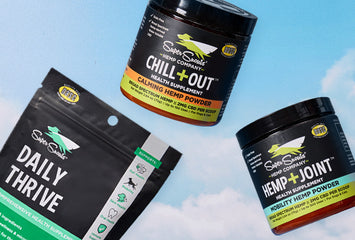
For predictable triggers — fireworks, thunderstorms, vet visits, travel — Chill + Out combines L-tryptophan, chamomile, passionflower, and broad-spectrum hemp (THC removed to non-detectable levels) in a chew given 30 to 60 minutes ahead of the trigger. If hemp isn't the fit for your household, routine consistency, structured exercise, and desensitization training go a long way for Corsos.
Immunity and long-term wellness: medicinal mushrooms
The Cane Corso's immune system is generally robust, but like many large breeds, Corsos can develop autoimmune issues later in life. Medicinal mushrooms are one of the better-studied ingredient categories for long-term immune support. Beta-glucans in reishi, turkey tail, shiitake, and maitake appear to modulate canine immune function — calming overactive responses and supporting underactive ones.
Turkey tail in particular has an established track record in veterinary oncology nutrition, and reishi has been studied for supporting senior dogs through normal aging. A multi-mushroom blend offers broader coverage than any single species. The same Super Shrooms blend that supports skin and allergy response pulls triple duty here — which is why it's a staple in our recommendations for Corsos from middle age onward.
Building a realistic routine
Five supplements on a food bowl every morning isn't realistic or necessary. A practical starter routine for most healthy adult Corsos is three products: a daily joint supplement built on green-lipped mussel (non-negotiable for this breed), a digestive product matched to the specific issue (Firm Up! for stool consistency, G.I. Balance for gas, Pumpkin Latte for reflux), and a mushroom blend for skin and immune support from middle age onward. Calming support stays on hand for predictable triggers.
Two things matter. First, dose correctly. Dosing is weight-based, and Corsos will land at the upper end of most charts. Underdosing a 110-pound dog is the most common mistake we see. Second, supplements work with good foundations, not instead of them. Quality diet, healthy weight, appropriate exercise, regular vet care — those are the base layer. Supplements are targeted additions on top.
Built right, a Corso's supplement routine isn't about piling on products. It's about matching the real risks of the breed to the ingredients that actually address them. That's what earns a place on the label, and on the food bowl.