

If you've tried a generic wellness protocol on a Bullmastiff and it hasn't landed, that's predictable. The Bullmastiff was developed in 19th-century England to track and hold poachers — a cross between Mastiffs and Bulldogs, with 60/40 being the target ratio. The result is a silent, powerful guarding breed. The dog in front of you carries that lineage in its build, metabolism, and temperament — and a supplement plan that doesn't respect that is starting from the wrong place.
Most supplement marketing reaches for long ingredient decks and vague benefit claims. What actually helps a Bullmastiff is narrower — a short list of well-studied inputs at doses that match the dog in front of you. Here's the breakdown, category by category.
Why Bullmastiffs need a tailored supplement plan
Giant breeds like the Bullmastiff — routinely 100-130 lbs at adulthood — carry a much higher lifetime risk of orthopedic problems, gastric dilatation-volvulus (bloat), and certain cardiac conditions than smaller dogs. Every pound compounds, and the breed's physical demands accelerate wear on joints that are already under more load than a small dog's. On top of the physical profile, the Bullmastiff is a giant guarding breed built for silent restraint — a disposition that shapes how stress, exercise load, and recovery all play out day to day.
None of this should read as alarming. The typical Bullmastiff clears a 8-10 years lifespan with room to spare when the basics are handled. Supplement choices either target real breed exposures or they don't — that distinction is what separates a working plan from a cluttered one.
Practically speaking, a Bullmastiff's routine breaks into four useful supplement categories: joint and mobility, digestive health, skin and coat, and long-term immune support.
Joint and mobility: glucosamine, chondroitin, and green-lipped mussel
Joint issues are one of the most frequently flagged concerns in the Bullmastiff. Hip and elbow dysplasia are both elevated, and the breed's weight accelerates orthopedic wear. Combine that genetic predisposition with the breed's build and activity level, and joint support stops being optional.
Three ingredients anchor the evidence base for canine joint care: glucosamine, chondroitin sulfate, and MSM (methylsulfonylmethane). Glucosamine contributes to the raw material of cartilage. Chondroitin sulfate supports cartilage's ability to resist wear and compression. MSM supplies the sulfur that connective tissue requires. Everything else a joint formula does is layered on top of these three.
For a one-ingredient joint intervention, green-lipped mussel carries the strongest case. It supplies glucosamine and chondroitin naturally and contributes omega-3 fatty acids — including the rare ETA — that support a balanced inflammatory response. Peer-reviewed studies running 8 to 12 weeks have demonstrated real improvements in joint comfort in supplemented dogs. For a Bullmastiff, that's multiple mechanisms engaged from a single input.
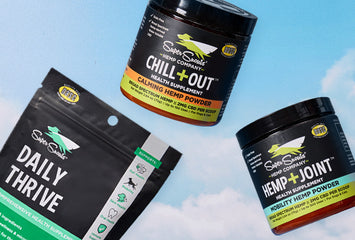
That's why Joint Power is single-ingredient by design. One input: 100% New Zealand green-lipped mussel, cold-processed and lipid-stabilized. No synthetic glucosamine, no fillers. It goes on top of food, which is the format that actually sticks in most households — particularly for a 130 lbs dog who'd prefer not to be pilled.
Start joint support earlier than you think. For a Bullmastiff, that means two to three years old at the latest — earlier for dogs with a family history of dysplasia. Waiting until visible stiffness appears is waiting too long.
Digestive health: stool consistency, gas, and acid reflux are three different problems
Deep-chested breeds like the Bullmastiff carry an elevated lifetime risk of bloat — a twisting of the stomach that is a true emergency. According to VCA Animal Hospitals, large, deep-chested dogs are among the most susceptible. No supplement prevents bloat. What supports a Bullmastiff's digestive system is day-to-day stability: multiple smaller meals, no vigorous exercise around mealtime, and consistent stool quality so you notice changes fast.
Digestive health isn't a wellness buzzword, it's the groundwork. When digestion isn't stable, downstream systems wobble too. In practice, what owners describe as 'digestive problems' breaks into three distinct buckets: stool consistency, gas and bloating, and acid reflux. Different ingredients address each one.
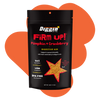
Stool consistency responds to dried pumpkin more reliably than to any other single ingredient we've tested. The mix of soluble and insoluble fiber lets it correct in either direction. Firm Up! keeps to the essentials: dried pumpkin and dried apple, and nothing else. No added probiotics, no herbal additions — the simpler formula is deliberately the whole point.
Gas, bloating, and day-to-day GI unease ask for a different formula than loose stool does. Prebiotic fibers — like organic agave inulin — feed the beneficial bacteria that keep fermentation balanced. Fennel and ginger ease gas at the source. Apple pectin adds soluble fiber support. G.I. Balance delivers all of these in one blend: pumpkin, apple pectin, organic fennel seed, ginger, and organic agave inulin.
Acid reflux and the occasional bile vomit sit in their own category. Goat milk buffers stomach acid naturally and carries bioavailable nutrition along with it; pumpkin coats and soothes the GI tract. Pumpkin Latte is both in one daily product — an easy-to-maintain option for Bullmastiffs showing reflux patterns.
Skin and coat: omega-3s, quercetin, and functional mushrooms
Short-coated breeds like the Bullmastiff still need skin support. Skin fold dermatitis around the face and hot spots are both common. The short coat offers limited protection.
The evidence base for canine skin health points at three ingredient families. First, EPA and DHA omega-3 fatty acids — they reinforce the skin barrier and soften the biochemical pathways behind itch. Second, quercetin — a plant flavonoid with research support for a normal histamine response, sometimes called 'nature's Benadryl.' Third, beta-glucans from functional mushrooms (reishi, turkey tail, chaga, shiitake, lion's mane, maitake, cordyceps) which modulate the overactive immune responses usually lumped into 'seasonal allergies.'
Super Shrooms is how we deliver those beta-glucans in a single product: seven mushrooms, one inactive ingredient, sprinkled on food. It pulls double duty for skin support and general immune modulation, which makes it the low-effort daily choice for Bullmastiffs who flare seasonally.
The sequence matters: before you add a skin supplement, clear the common upstream drivers — food allergies, environmental exposures, fleas. A supplement can't compensate for those. When they're addressed, the two ingredients that consistently move skin health forward are omega-3 fatty acids and mushroom-derived beta-glucans, generally within a few weeks.
Immunity and long-term wellness: medicinal mushrooms
The Bullmastiff's immune system is generally robust early in life, but giant breeds age fast. The breed ages fast — joint, cardiac, and cancer concerns all emerge by middle age.
Medicinal mushrooms have the strongest research footprint among long-term immune support categories for dogs. Beta-glucans in reishi, turkey tail, shiitake, and maitake appear to modulate canine immune function — calming overactive responses and supporting underactive ones. Turkey tail has a particular track record in veterinary oncology nutrition, and reishi has been studied for aiding normal aging in senior dogs. A multi-mushroom blend gives broader coverage than any single species. Super Shrooms is the same blend covering skin support — pulling triple duty here, which is why it stays in our recommendations for Bullmastiffs from middle age onward.
Building a realistic routine
Keep the daily routine small enough to actually maintain. For a healthy adult Bullmastiff, that usually means three products: a daily joint supplement built on green-lipped mussel (effectively non-optional for most breeds as they age), a digestive product matched to the actual pattern (Firm Up! for stool consistency, G.I. Balance for gas, Pumpkin Latte for reflux), and a mushroom blend for skin and long-term immune support from middle age on.
Worth stating plainly: this isn't a universal supplement routine. It's the Bullmastiff's, built around joint and mobility, digestive health, skin and coat, and long-term immune support. We didn't include products for categories the breed isn't documented to face an elevated risk in — doing so would inflate the routine without improving outcomes. A tighter supplement plan that reflects the breed's actual risks beats a broader one every time.
The two variables that matter most: dose and fundamentals. On dose — these products are weight-based, and owners err low far more often than high. A Bullmastiff at 100-130 lbs needs the full weight-appropriate serving. On fundamentals — diet, healthy weight, appropriate exercise, and routine vet care are the base; supplements don't replace any of them. Plan on four-to-eight-week effect windows for most ingredients and hold consistent dosing throughout.
The supplement routine that actually works for a Bullmastiff isn't about piling on. It's about pairing the breed's specific risks with the ingredients that address them, and trusting the short list to do the job.