
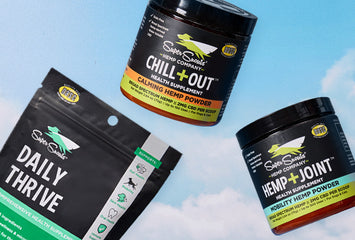

A Silky Terrier's supplement plan should be built around two documented weak points: the knees and the skin under that famous coat. Add steady gut support — because a ten-pound dog has very little margin for digestive error — and you've covered what actually matters for this breed.
We make supplements at Super Snouts, so we'll be upfront about our bias. But we'd rather you buy three things that fit your dog than eight that don't.
Breed snapshot: what a Silky Terrier actually is
The Silky Terrier was developed in Australia in the late 1800s by crossing Yorkshire Terriers with Australian Terriers. The result is a genuine terrier in a toy package: roughly 10 pounds, about 9–10 inches at the shoulder, with a straight, glossy blue-and-tan coat that parts down the spine.
Don't let the hairdo fool you. Silkys were bred to kill rodents, and the prey drive never left. They're keen, opinionated, and busy — closer in attitude to a working terrier than a lapdog. Life expectancy runs a generous 13–15 years, per the American Kennel Club, which means the choices you make at age two are still paying dividends at age twelve.
Why do Silky Terrier knees need attention?
Patellar luxation — a kneecap that slips out of its groove — is one of the most common orthopedic problems in toy breeds, and Silkys are on the list. You might see the classic skip-hop: your dog trots along, holds a back leg up for a few strides, then carries on like nothing happened. Legg-Calvé-Perthes disease, a disorder of the hip's femoral head that shows up in young small dogs, is also documented in the breed.
Neither of these is something a chew can fix, and we won't pretend otherwise. Grading and treatment decisions belong to your veterinarian. What owners can do is manage the terrain around the joint: keep weight lean, limit repeated couch-launches with steps or ramps, and supply the nutrients cartilage uses to maintain itself.
Green-lipped mussel is our favorite ingredient here. This New Zealand shellfish naturally packages omega-3 fatty acids (including rare ETA), glucosamine, and chondroitin in one whole-food source. Our Joint Power is nothing but that — 100% green-lipped mussel, no fillers — which makes dosing a toy breed refreshingly simple.
What's going on with Silky Terrier skin and coat?
That single-layer silky coat is low-shedding, but the skin beneath it isn't bulletproof. Allergic skin disease and scratching-related irritation show up in the breed, and a thin coat means every hot spot is visible. A large share of skin symptoms trace back to allergies — environmental or food-related — and VCA Animal Hospitals notes that itching, chronic ear issues, and recurrent skin infections are the typical signs.
Here's the gut connection most owners miss: a meaningful portion of the immune system operates from the gastrointestinal tract, so skin that overreacts is often a whole-body conversation, not just a surface one. Functional mushrooms like reishi, turkey tail, and shiitake have been studied for their beta-glucan content, which interacts with immune receptors. We blend seven of them into Super Shrooms as a daily way to feed that system. If your Silky is scratching raw or losing hair, though, that's a vet visit first — supplements come after diagnosis, not instead of one.
Small stomach, small margin for error
A 10-pound dog eating a half-cup of food per day feels every dietary indiscretion. One scavenged crust on a walk is a much bigger percentage of a Silky's intake than a Labrador's. Terriers are also enthusiastic hunters of things they should not eat.
Soft stool and intermittent diarrhea in small breeds often respond to fiber that regulates water in the colon. Pumpkin is the classic example — soluble fiber that firms loose stool and softens hard stool. Our best-seller Firm Up! pairs dehydrated pumpkin with apple pectin for exactly this job, and the small serving size scales down neatly for toy dogs. Anything beyond 48 hours of loose stool, blood, or a dog who stops eating deserves a call to your veterinary clinic rather than a scoop of anything.
Dental notes (no supplement will save you here)
Toy breeds pack full-size teeth into miniature jaws, and Silkys are prone to crowding, tartar, and early tooth loss. We'd love to tell you a powder solves this. It doesn't. Daily brushing and professional cleanings, on the schedule your vet recommends, are the real intervention. We mention it because dental pain quietly ruins appetite and mood in small seniors, and owners often blame age when the culprit is a molar.
How we'd build a Silky Terrier's routine
- Every day, lifelong: green-lipped mussel for joint and connective-tissue support — start before the knees complain, not after.
- Every day, if skin or immune reactivity runs in your dog: a mushroom blend for beta-glucan support.
- In the cabinet for flare-ups: a pumpkin-based fiber supplement for the inevitable garbage-gut episode.
- Weight, always: even one extra pound on a Silky is a 10% overload on those kneecaps. Measure meals; skip the free-feeding.
Run the whole plan past your vet at your next visit — especially if your dog already has a patella grade on file or takes any medication.
Silky Terrier supplement FAQ
At what age should a Silky Terrier start joint support?
There's no magic birthday, but because patellar issues are congenital in structure, many owners start whole-food joint ingredients around 12 months once growth plates close. Ask your veterinarian to check the knees at each annual exam so you have a baseline grade to track.
Is a Silky Terrier's coat helped by fish oil or by mussel?
Both supply omega-3s. Green-lipped mussel offers a broader mix of fatty acids plus natural glucosamine and chondroitin, so it pulls double duty for a breed with both skin and knee concerns. Your vet can help you pick one omega source rather than stacking several.
My Silky gets loose stool every time we change foods. Normal?
Common, yes — abrupt diet changes outpace the gut microbes' ability to adapt. Transition over 7–10 days, and consider a soluble-fiber supplement during the switch. If loose stool persists past the transition, get your veterinary team involved to rule out food sensitivity.
Are supplements safe alongside my dog's dental cleanings and vaccines?
Generally the ingredients we've covered are food-based and low-risk, but always tell your vet everything your dog takes before anesthesia or new prescriptions. Some ingredients affect clotting or interact with medications.
The short version
A Silky Terrier is a long-lived, structurally tiny dog with terrier appetites and toy-breed knees. Support the joints early, feed the skin from the inside, keep a stool-firming fiber on hand, and let your veterinarian referee every decision. That's the whole strategy — and thirteen-plus years is a long time to enjoy getting it right.
This article is educational and isn't a substitute for individualized veterinary advice. Check with your vet before adding any supplement to your Silky Terrier's routine.