
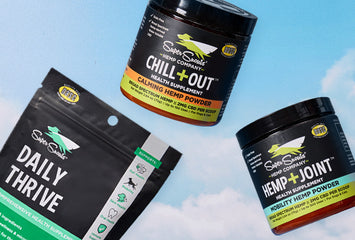

When a dog refuses a supplement, the fix is almost always one of four things: change the delivery vehicle, change the timing, change the texture, or split the dose. Start with the least invasive option and work down the list. Forcing the issue on day one teaches a dog to avoid you at supplement time, which creates a much harder problem than the one you started with.
Why do dogs reject supplements they can barely taste?
Smell, mostly. A dog's olfactory epithelium carries somewhere around 200 to 300 million receptors depending on breed, against roughly six million in a person. She is not tasting the fish oil; she is smelling it from across the room before the bowl hits the floor.
Texture ranks second. Powder that clumps against the roof of the mouth, or a gritty layer at the bottom of a bowl, registers as wrong even when the flavor is fine. And there is a learned component — a dog who once got a bitter capsule in a piece of cheese will inspect cheese suspiciously for months afterward. That last mechanism explains most cases where a trick works brilliantly for four days and then stops.
What should you try first?
Work through these in order. Roughly eight dogs in ten resolve within the first three.
- Mix it into something wet and strongly flavored. Plain canned food, unsalted bone broth, or a spoon of plain yogurt. Wet carriers coat the powder instead of leaving it loose.
- Reduce the dose temporarily. Give a quarter of the amount for four days, then half, then full. Gradual introduction beats a full scoop on day one.
- Change the timing. Offer it as the first thing in the morning when she is hungriest, not alongside a full dinner she can afford to walk away from.
- Warm the food slightly. Ten seconds in the microwave lifts aroma and often overrides the supplement's smell.
- Move to a different room. Sounds absurd, works surprisingly often for dogs who have built an association with a specific spot.
- Hand-feed the first few bites. Removes the bowl from the equation entirely.
Which carrier foods actually work?
On that last row: xylitol is genuinely dangerous to dogs and appears in more nut butters each year. The AVMA's guidance on xylitol is worth reading once so you know what to look for on a label.
Does the form of the supplement matter?
A great deal, and switching formats solves refusals that no amount of hiding will. A dog who spits out capsules may take the identical ingredient as a powder stirred into wet food. A dog who avoids powder may take a chew.
Powders have a specific advantage here: they disappear into moisture. Firm Up is a concentrated pumpkin powder that rehydrates when stirred into wet food or broth, which puts it in the easiest category to disguise. If format is your sticking point, our comparison of powder, chew, and liquid supplement formats walks through the trade-offs.
What about capsules and pills specifically?
Capsules give you an option powders do not: you can often open them. Check with the manufacturer or your veterinarian first, because enteric coatings and time-release formulations exist for a reason and breaking them changes how the contents behave. For a plain gelatin capsule holding a powder, emptying it into food is usually fine.
If you need to give it whole, the mechanics matter. Tilt the head back until the nose points at the ceiling, slip the capsule as far back over the tongue as you can reach, close the mouth, and stroke the throat while blowing gently across the nose to trigger a swallow. Follow immediately with water or a small treat — capsules that lodge in the esophagus cause real irritation. Pill guns work well for dogs who object to hands in the mouth.
How do you avoid poisoning the well?
The most common self-inflicted problem is burning through carriers. A dog gets the supplement in cheese, catches on, refuses cheese, and now cheese is unusable for anything including training.
Two habits prevent this. First, rotate carriers every few days rather than waiting for refusal. Second, use the decoy technique: give three plain pieces of the carrier, then the loaded one, then two more plain ones. She stops inspecting when most of what arrives is clean. Keep at least one high-value food entirely out of the supplement rotation so you always have an untainted option in reserve.
When should you stop troubleshooting and call the clinic?
When refusal is new and general rather than specific. A dog who has taken a supplement happily for eight months and abruptly stops, or who begins turning down food she has always liked, is telling you something about how she feels — nausea, dental pain, and early kidney changes all show up first as pickiness.
Ask the practice that recommended the supplement how they want it given, because that answer sometimes changes when a dog is on other medication. Some products need to be separated from a drug by a couple of hours, and no amount of clever hiding fixes a timing problem. Our overview of supplement and medication timing covers the basics.
What should you never do?
Do not hide a supplement in a food your dog needs to keep trusting, like her regular kibble, if refusal risks her skipping meals. Do not force a powder into the cheek pouch of a struggling dog; aspiration is a real risk and the fight costs you more than the dose is worth. Do not crush anything without checking. And do not double up because yesterday's went uneaten — a missed day matters far less than an overdose.
FAQ
Can I put a supplement in my dog's water bowl?
Generally no. You cannot verify how much she consumed, most powders settle or foam, and a strange taste in water can reduce overall drinking, which creates a bigger problem than the one you solved. Water is one of the few things worth keeping completely plain and reliable.
My dog eats around the powder and leaves it in the bowl. Now what?
Add moisture. Dry kibble lets powder separate and pool at the bottom, but a few tablespoons of warm water or broth makes the whole meal one consistent texture with nothing to sort. Stirring thoroughly, then letting it sit for two minutes so the powder hydrates, usually settles it.
Is it okay to skip a day if she absolutely won't take it?
For most daily maintenance supplements, yes — one missed day has no meaningful consequence. Prescription products are a different matter, and skipping those should be reported to your veterinarian rather than absorbed quietly. When in doubt about which category you are in, ask.
Should I give supplements with food or on an empty stomach?
With food, in most cases. Food buffers the stomach, improves absorption of fat-soluble ingredients, and gives you a natural carrier. A handful of products specify empty-stomach administration, so read the directions once carefully rather than assuming the general rule applies.
How long before a picky dog accepts something new?
Give it a week of consistent, low-pressure offering before concluding it will not work. Many dogs who reject something on day one accept it by day five, particularly when the dose starts small. If a full week of patient effort produces nothing, switch formats rather than persisting with the same approach.