
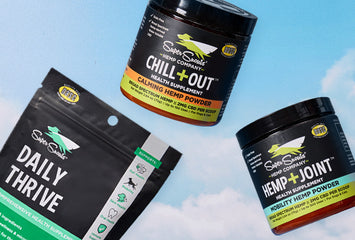

For a Great Pyrenees, supplement planning starts at the skeleton: a 100-plus-pound guardian breed with documented hip dysplasia and patellar luxation in its lines needs joint support treated as a foundation, not an afterthought. Right behind the joints come two more Pyr realities — a big, deep chest that puts bloat on the watchlist, and a colossal double coat with skin underneath that needs feeding from the inside.
The mountain guardian at a glance
The Great Pyrenees was bred to sit on a freezing mountainside and out-think wolves, and everything about the breed reflects it: males run 27 to 32 inches and commonly exceed 100 pounds, wrapped in a weatherproof white double coat. The AKC describes the Pyr as smart, patient, and calm — with the independent streak of a dog whose ancestors made their own decisions at 2 a.m. Life expectancy is 10 to 12 years, respectable for a giant. They're famously gentle with their families, nocturnally vocal, and constitutionally opposed to recall.
Giant size is the thread running through every health topic below. When a dog carries this much frame, small percentages of wear become large absolute loads.
Why joints come first in a giant breed
Hip dysplasia — a loose, poorly fitting hip joint that grinds toward arthritis — is a documented concern in the Great Pyrenees, and the breed also sees patellar luxation more than most big dogs. VCA's overview of hip dysplasia explains the mechanics well: genetics load the gun, but growth rate and body weight pull the trigger. That gives Pyr owners three real levers.
Lever one: raise them slow. Giant-breed puppies should grow on large/giant-breed puppy formulas that control calcium and calories. Fast-grown Pyrs pay for it at five.
Lever two: keep them lean for life. A Pyr carrying ten extra pounds under all that coat is easy to miss — learn to body-condition-score by hand, and ask your veterinarian to check your technique at each visit.
Lever three: feed the joint machinery. This is where we'd bring in green-lipped mussel, a whole-food source of omega-3 fatty acids, glycosaminoglycans, and chondroitin. It's the only ingredient in our Joint Power — 100% New Zealand green-lipped mussel, nothing else — because a single ingredient with data behind it beats a dozen fillers on a label. For a breed like this, we'd start it in early adulthood rather than waiting for stiffness. What supplements cannot do is fix a dysplastic joint; limping, bunny-hopping, or reluctance on stairs is diagnostic territory, and your vet may want radiographs.
Is bloat a real risk for Great Pyrenees?
Yes — large and giant deep-chested breeds carry elevated risk of gastric dilatation-volvulus, and the Pyrenees has the chest for it. The playbook mirrors what we tell every giant-breed family: multiple smaller meals instead of one banquet, no hard exercise bracketing mealtimes, slow-feeder bowls for gulpers, and a conversation with your veterinarian about prophylactic gastropexy, especially if anesthesia is already scheduled. Know the emergency picture — tight swollen belly, dry heaving, sudden pacing and drool — and treat it as a drive-now situation.
Day to day, a rumbling, gassy giant is no fun to share a living room with, either. A targeted blend like G.I. Balance uses probiotics and soothing botanicals to address gas and everyday stomach upset. We'll say it plainly: calmer digestion is a comfort-and-monitoring win, not a GDV preventive. Nothing in a jar substitutes for feeding structure and veterinary guidance in this category.
What's happening under all that coat?
The Pyr's double coat is self-cleaning and shockingly low-maintenance for its volume, but the skin beneath deals with real challenges: hot spots in humid weather, seasonal shedding by the grocery bag, and moisture trapped after rain or swims. Skin is also where immune imbalance tends to announce itself first in dogs.
Inside-out support looks like this: a complete diet with adequate omega-3s, consistent brushing through coat-blow season so air reaches the skin, and — where we can help — functional mushroom polysaccharides. Our Super Shrooms blends seven organic mushrooms (turkey tail, reishi, shiitake, and friends) studied for immune-modulating beta-glucans. A guardian breed that works outdoors in all weather is exactly the kind of dog we formulated it for. Any moist, spreading, painful skin lesion needs a veterinary exam promptly — hot spots expand fast under thick coat, and clipping and topical treatment are a vet's call.
The routine we'd actually run
Here's a Great Pyrenees cabinet with no wasted scoops:
- Every day, lifelong: green-lipped mussel for joints, dosed to weight. Start young; giants don't get do-overs on cartilage.
- Every day, or during gassy stretches: G.I. Balance with a meal, alongside a two-or-three-meal feeding structure.
- Seasonally: Super Shrooms through spring and fall coat-blow, insect season, and heavy outdoor working months.
- On standby: a pumpkin-fiber stool support like Firm Up! for the inevitable diet hiccups, boarding stays, or barn-adjacent snacking incidents that livestock guardians engineer for themselves.
Introduce one at a time, watch stool and appetite for a few days between additions, and bring the whole list to your vet visit so it's on your dog's record. Giant breeds also hit senior status early — around age seven — so recheck the plan then.
Questions Pyr owners bring us
When should a Great Pyrenees start joint supplements?
We'd begin in early adulthood — around 18 to 24 months, once growth plates have closed — rather than waiting for visible stiffness. Cartilage support is a long game in giant breeds. Confirm timing and dose with your veterinarian, particularly if your pup's hips have ever been flagged.
How do I keep a dog this size lean when he's mostly coat?
Use your hands, not your eyes. Ribs should be easy to feel under light pressure; a sagging belly line you can feel through fur means it's diet-adjustment time. Your vet can assign a body condition score and a target weight so you're not guessing under 6 inches of fluff.
My Pyrenees eats fast. What actually helps?
A slow-feeder bowl, splitting the day's food into three meals, and a calm feeding spot away from other pets all reduce gulping. These habits matter more in deep-chested giants. If gulping comes with regular regurgitation, get your veterinarian involved.
Do white-coated breeds like Pyrs have special skin needs?
The white coat itself isn't fragile, but the density is — trapped moisture invites hot spots. Dry your dog thoroughly after rain, brush weekly (daily in shedding season), and support skin from within through diet and immune-supportive ingredients. Recurring skin trouble deserves an allergy workup with your vet.
Is bloat surgery preventable with feeding changes alone?
Feeding structure lowers risk factors but can't eliminate risk in a predisposed chest. Prophylactic gastropexy is the only intervention shown to largely prevent the deadly twist, and it's worth a genuine conversation with your veterinarian — many owners bundle it with another planned procedure.
Last word from us
A Great Pyrenees spends a decade guarding everything you love; the least we can do is guard the hips, gut, and skin doing the work. Build the joint foundation early, structure the meals around that deep chest, feed the skin through the seasons, and let your veterinarian lead on anything diagnostic. Simple inputs, faithfully repeated — the Pyr would approve of the philosophy.