
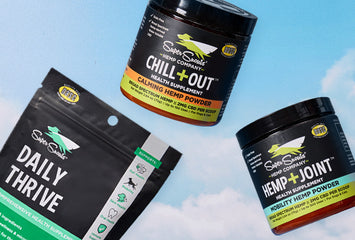

For one loose stool in a dog who is otherwise bright and drinking normally, soluble fiber comes first. Firm Up is a concentrated pumpkin-based source of it, and it acts on stool texture inside a day. A bland diet earns its place on day two, when the gut needs a rest from fat and variety. Probiotics play the longer game, supplying live cultures after antibiotics, a food switch, or a stressful stretch. None of the three cancels the others out. Sequence beats picking a winner.
What the three actually do
Soluble fiber changes stool texture by managing water. Mechanical, and fast.
A bland diet reduces the work the gut has to do: less fat, fewer ingredients, smaller portions. Probiotics add live microorganisms and may nudge the population already resident in the colon, which is a slower and less predictable process.
Soluble fiber, briefly
Soluble fiber gels in water. Down in the colon that gel binds free water, so watery stool gains form. Some of the fiber also gets fermented by resident bacteria into short-chain fatty acids, the preferred fuel of the cells lining the colon.
Pumpkin is a well-tolerated, palatable source of it. The AKC's nutrition library has more background for owners who like to read before they add anything to a bowl.
A bland diet: what it is and what it isn't
Bland means low fat, low residue, easy to digest, and monotonous. Boiled skinless chicken breast or lean turkey with white rice is the classic home version. Therapeutic gastrointestinal diets from a clinic are the balanced version.
It isn't long-term food. Homemade chicken and rice runs short on essential fatty acids, calcium, and several vitamins. Three to five days is the usual window, and your veterinary team should be the one deciding to extend it.
Probiotics: live cultures, slower clock
Canine probiotic strains are typically Enterococcus, Bifidobacterium, or Lactobacillus species, sometimes paired with a prebiotic that feeds them. Colonization is usually transient, meaning the effect lasts about as long as you keep giving it.
Expect days to weeks rather than hours. Probiotics are strongest as a supporting player around a known disruption: a course of antibiotics, a boarding stay, a move, a diet change.
Side by side
Day one
Withhold nothing unless your vet says otherwise. The fasting advice of twenty years ago has largely fallen out of favor for adult dogs with mild upset. Keep water available all day.
Feed the normal food in smaller, more frequent portions and add soluble fiber. Watch hydration by checking that the gums stay moist and the skin over the shoulders springs back when you lift it.
Days two and three
Still loose? Move to the bland diet and keep the fiber going. Four small meals is easier on an irritated gut than two large ones.
Note frequency and consistency in your phone. A vet wants the trend, not a single description delivered from memory.
Days four through seven
Improving stool means you start blending the regular food back in, roughly a quarter at a time across three or four days. Rushing this is the most common reason a dog relapses on day five.
Probiotics fit naturally right here, during reintroduction, when the colon is being asked to handle ordinary food again.
When you skip all three and phone the clinic
Blood, whether bright red streaks or black tarry stool. Vomiting that stops a dog holding water down. A tucked-up, painful belly. Gums that look pale or tacky. Any diarrhea in a puppy under six months, a toy breed, or a senior with existing conditions. Diarrhea running past 48 hours in any dog.
Those need veterinary hands on the dog. Fiber and rice are not the answer for a dog who is genuinely sick.
Can you use them together?
Yes, and often you should. Fiber and probiotics work through different mechanisms and get paired deliberately in plenty of digestive formulations. The Super Snouts range includes both single-purpose and combination options.
One caution: don't introduce three new things at once. Add them in the order above, a couple of days apart, so you can tell which one earned its keep.
How long is too long on a bland diet?
Past roughly five days, a homemade bland diet starts creating nutritional gaps rather than solving digestive ones. Growing puppies hit that wall sooner.
If your dog needs something gentle for more than a week, ask about a complete therapeutic option. The FDA's page on complete and balanced pet food spells out what that phrase legally requires.
What about fasting?
Skipping a meal was standard advice for a long time. Current thinking generally favors feeding small amounts of something easy to digest, because the cells lining the gut use nutrients in the lumen directly.
Puppies and small dogs should never be fasted, since blood sugar drops too quickly. Ask before withholding food from any dog.
FAQ
Which works faster, pumpkin or probiotics?
Pumpkin, by a wide margin. Soluble fiber affects the next bowel movement or two, while probiotics generally want days to weeks of consistent use.
Can I give Firm Up and a probiotic at the same meal?
Yes. There's no interaction to plan around. Mixing both into a small amount of wet food is the easiest way to get them down.
How much rice to chicken for a bland diet?
A common ratio is two parts cooked white rice to one part boiled lean chicken, fed in small portions across the day. Skip oil, salt, butter, and anything from the onion family. Your vet can size the portions to your dog's weight.
Do I need to stop the regular food completely?
Not necessarily, and not on day one. Plenty of mild cases settle on the normal diet in smaller portions plus soluble fiber. Full swaps are for dogs who don't improve.
Is a bland diet safe for a puppy?
Only briefly, and only with veterinary input. Puppies have narrow nutritional margins and dehydrate quickly, so any short course should be supervised.