

When fats don't get absorbed properly, the symptoms are distinctive. Here's recognition and approach.
Fat malabsorption — the failure to properly digest and absorb dietary fats — produces some distinctive clinical signs that owners often interpret as just 'sensitive stomach.' The underlying causes range from pancreatic to intestinal to bile-related, and identifying which applies shapes treatment.
If a product needs a long story, the ingredients usually don't justify it. Here's the working overview.
How fat digestion works normally
Dietary fat enters the small intestine after stomach processing.
Bile from the liver/gallbladder emulsifies fat into droplets.
Pancreatic lipase enzymes break down fats into fatty acids and monoglycerides.
These are absorbed across the intestinal lining and packaged into chylomicrons for delivery via lymphatic and blood systems.
Where fat absorption can fail
Pancreatic enzyme insufficiency (EPI) — lipase production inadequate.
Bile insufficiency — liver or gallbladder issues reducing bile flow.
Intestinal disease — damage to absorptive surface (IBD, lymphangiectasia).
Lymphatic system issues — impaired chylomicron transport (lymphangiectasia).
Recognition signs
Greasy, oily-looking stool (steatorrhea).
Pale or grayish stool color.
Foul-smelling stool — distinctive rancid odor.
Voluminous stool — passes more bulk than would seem to match food intake.
Weight loss despite adequate eating.
Poor coat quality.
Sometimes diarrhea, sometimes formed but abnormal stool.
Vitamin deficiencies in chronic cases (fat-soluble vitamins A, D, E, K).
EPI specifically
Covered in detail in our EPI article.
Diagnosed by serum TLI (trypsin-like immunoreactivity) test.
Treated with pancreatic enzyme replacement at every meal.
Lifelong management for confirmed cases.
Bile-related causes
Liver disease reducing bile production.
Gallbladder disease affecting bile storage/release.
Bile duct obstruction.
Diagnosis through liver function testing and imaging.
Intestinal causes
IBD damaging villi.
Lymphangiectasia (more detail in our dedicated article on that condition).
SIBO contributing.
Diagnosis often requires endoscopic biopsy.
Diagnostic workup
Comprehensive bloodwork including B12, folate, TLI, liver enzymes, bile acids.
Abdominal imaging.
Sometimes specific fecal fat testing.
Endoscopy with biopsies for intestinal causes.
Each step builds the picture. Your vet will work through them as needed.
Treatment depends entirely on cause
EPI: enzyme replacement.
Bile insufficiency: address liver/gallbladder cause.
IBD: anti-inflammatory therapy, dietary management.
Lymphangiectasia: low-fat diet, often with other interventions.
Misdirected treatment doesn't help — diagnosis matters.
Dietary considerations
Low-fat diet is appropriate for many fat malabsorption causes.
Medium-chain triglycerides (MCT) — can be absorbed without pancreatic lipase or bile, useful in some cases.
Quality-protein, easily digestible foods.
Fat-soluble vitamin supplementation if deficiencies documented.
Specific diets tailored to the underlying cause.
Long-term considerations
Many causes of fat malabsorption are chronic.
Periodic vet reassessment to monitor management effectiveness.
Watch for nutritional deficiencies developing.
Quality of life can be very good with appropriate management.
When supplements help
For dogs with diagnosed deficiencies, targeted supplementation under vet direction.
Probiotic support for SIBO contribution.
Antioxidant support.
B12 injections or oral supplementation when needed.
Always coordinated with your vet.
Common questions about fat malabsorption
Is greasy stool always fat malabsorption? Often, but not always. Some normal stool variation exists.
Can my dog have a normal life? Many can with appropriate management.
What about fish oil — safe with fat malabsorption? Discuss with vet — depends on cause and severity.
Will my dog need lifelong treatment? Many fat malabsorption conditions require ongoing management.
What to track at home
Stool appearance and odor.
Weight monthly.
Coat quality.
Energy and appetite.
Discuss any changes with your vet promptly.
Where our formulas fit
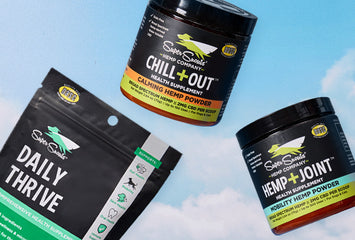
For dogs with diagnosed fat malabsorption and cleared by your vet for supportive supplementation, a daily multi-mechanism GI blend may complement the specific treatment your vet has prescribed for the underlying cause. When fat malabsorption management under vet supervision is the working diagnosis, multi-ingredient daily support tends to outperform isolated interventions. G.I. Balance is our default option here — sized for daily use, formulated around five well-studied GI ingredients.
Related reading
The bottom line
We wrote this piece for the owner who already cares and wants the evidence-backed version. There are plenty of articles for everyone else. We're more useful to the careful reader.