

EPI in Dogs: Exocrine Pancreatic Insufficiency Symptoms & Care
When the pancreas stops producing enough digestive enzymes — what to watch for, which breeds are over-represented, and how the condition is managed long-term.
EPI — exocrine pancreatic insufficiency — is a diagnosis that surprises most owners because the symptoms come on gradually and look like a feeding problem. The dog eats. The dog stays hungry. The dog loses weight. And nothing about the bowl seems to fix it.
We design for the dog you actually live with, not the marketing avatar. Here's what's happening in the pancreas, why some breeds are at higher risk, and what management looks like once it's named.
What the pancreas is supposed to do
The pancreas has two jobs. The endocrine half releases insulin. The exocrine half secretes digestive enzymes — amylase, lipase, protease — into the small intestine to break down starches, fats, and proteins.
EPI is failure of the exocrine half. Without enough enzyme output, food passes through largely undigested. The dog can be eating an excellent diet and absorbing very little of it.
The symptom signature
The classic presentation is weight loss despite a strong appetite. Stool volume is often dramatic — large, light-colored, sometimes greasy or oily-looking. Some dogs eat their own stool because the calories are still in it.
Coat quality drops. Energy fades. Some dogs become almost insatiable. By the time most owners reach a diagnosis, the dog is significantly underweight.
The breed pattern
German Shepherds are by far the most over-represented breed in EPI case series. The condition tends to run in family lines, suggesting a strong genetic component — likely an autoimmune destruction of the enzyme-producing pancreatic acinar cells.
Other breeds with documented elevated rates include Rough Collies, Cavalier King Charles Spaniels, and Chow Chows. Any breed can develop EPI, but if you have a Shepherd showing the classic signs, EPI moves up the list quickly.
Diagnosis: the TLI test
The serum trypsin-like immunoreactivity (TLI) test is the standard diagnostic. A fasted blood sample measures circulating trypsinogen — the precursor to one of the pancreatic enzymes. EPI dogs run dramatically low.
The test is reliable, accessible, and inexpensive relative to other GI diagnostics. If your vet suspects EPI, ask about TLI before more invasive workups.
Treatment: enzyme replacement
The cornerstone of EPI management is oral pancreatic enzyme replacement — usually a powder mixed into food at every meal, made from porcine (pig) pancreas. Most dogs respond dramatically once they're on the right dose.
Stool quality normalizes within days to a few weeks. Weight comes back over months. Some dogs stabilize on a fraction of the initial dose; others need lifelong full-dose supplementation.
B12 and folate considerations
EPI dogs are commonly low in vitamin B12 because the malabsorption (and often a co-occurring SIBO) interferes with B12 uptake. Many vets check and supplement B12 at diagnosis.
Folate sometimes runs high — a marker of small-intestinal bacterial activity. The combination of low B12, high folate, low TLI is a recognizable EPI pattern on bloodwork.
Diet considerations
Most EPI dogs do well on a moderately fat, highly digestible diet. Very high-fat foods can overwhelm the residual enzyme capacity. Very low-fat foods can leave the dog short on calories.
Whether to use grain-free, prescription, or standard maintenance formulas is breed and case dependent. The enzyme replacement does most of the heavy lifting; the diet just needs to not work against it.
Long-term outlook
With consistent enzyme supplementation, most EPI dogs live normal lifespans at normal weights. The diagnosis sounds dire — and the pre-diagnosis weight loss can be alarming — but the management is well-established and effective.
The two practical demands are consistency (every meal, every day) and cost (enzyme replacement is one of the more expensive long-term canine medications). Owners who do well plan for both.
Common questions about EPI in dogs
Can EPI develop suddenly or is it always gradual? It can appear suddenly in middle-aged dogs — particularly breeds with autoimmune predisposition — though the underlying pancreatic damage was usually progressing for months before symptoms became obvious. The diagnosis often follows a few weeks of dramatic weight loss.
Is the enzyme replacement temporary or lifelong? Lifelong, in most cases. The pancreatic damage that causes EPI doesn't reverse. Some dogs stabilize on lower doses than they started with, but discontinuation usually leads to relapse.
Why does my EPI dog still have soft stool sometimes? Even on enzyme replacement, occasional GI variability is common. SIBO is frequent in EPI dogs and may need separate management. Diet stability matters; EPI dogs handle dietary variation worse than healthy dogs.
Are there alternatives to porcine pancreatic enzymes? Some plant-derived alternatives exist but are less well-studied for clinical efficacy. For most diagnosed EPI cases, the porcine product remains the standard.
What to track at home
Body weight weekly — should stabilize and then slowly return to ideal. Stool quality daily. Appetite (often dramatically reduced from pre-diagnosis insatiable hunger as nutrients start absorbing).
B12 levels with vet checks at 4 and 12 weeks after starting supplementation. Folate levels for SIBO monitoring.
Where our formulas fit
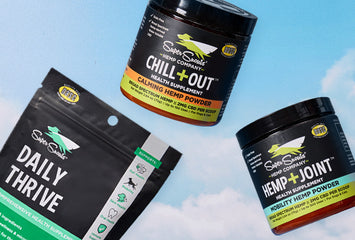
Once a dog is stable on enzyme replacement, daily GI support can complement the foundation — keeping fiber, prebiotics, and gentle herbs in the rotation. When post-EPI-stabilization daily GI support is part of the picture, a formula for general daily gut support is ideal. It pairs pumpkin fiber with apple pectin, ginger, and fennel — herbs traditionally used to ease GI tension — plus agave inulin as a prebiotic.
Related reading
- SIBO in Dogs: Small Intestinal Bacterial Overgrowth Explained
- Leaky Gut in Dogs: Symptoms, Causes & How to Help
The bottom line
When we look at a dog who's still going at thirteen, we don't see a miracle product. We see consistency. Daily inputs, attentive owners, early adjustments to the routine. None of that scales as a hashtag, and that's exactly why it works.