
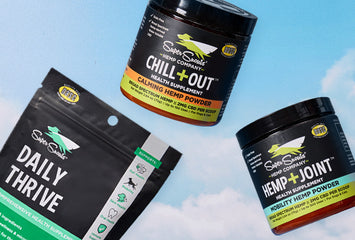

A Dutch Shepherd owner's supplement priorities come down to three systems: the joints that absorb years of hard sprinting, the gut that has to perform under working-dog stress, and the nervous system that drives all that famous focus. This breed is one of the healthiest shepherds on the planet, so smart supplementation here is about protecting an athlete, not patching a problem.
We'll walk through what the research says about this brindle powerhouse, which support categories actually apply, and how we'd structure a daily routine from puppyhood through the senior years.
Breed snapshot: the farmer's all-rounder
The Dutch Shepherd was bred in the rural Netherlands as a jack-of-all-trades — herding sheep, pulling carts, guarding the yard, even churning butter on a treadwheel. Males stand 21.5 to 24.5 inches and weigh 45 to 75 pounds, with a lean, muscular frame under a brindle coat that comes in short, long, and rough varieties.
Because the breed stayed a working dog rather than a show-ring favorite, its gene pool avoided many of the problems that plague more popular shepherds. The American Kennel Club describes them as lively, athletic, and intensely loyal, with a life expectancy of 11 to 14 years — excellent for a dog this size. Today you'll find Dutchies excelling in police work, protection sport, search and rescue, and agility.
That working heritage is exactly why supplement planning matters. A dog that launches off A-frames and sprints after decoys puts loads on its body that a couch companion never will.
How hard does athletic work hit a Dutch Shepherd's joints?
Harder than most owners realize. While hip dysplasia rates in Dutch Shepherds run well below those of German Shepherds, the condition still appears in the breed, and reputable breeders screen hips and elbows for good reason. VCA Animal Hospitals notes that large, active breeds carry elevated risk, and that early joint support and lean body condition are two of the most protective factors an owner controls.
Even a Dutchie with perfect hips accumulates wear. Repeated jumping, hard turns on bite work, and mile after mile of running compress cartilage the same way marathon training stresses a human runner's knees. Cartilage has no blood supply of its own — it depends on joint fluid for nutrients — so keeping that fluid healthy is the whole game.
This is where green-lipped mussel earns its reputation. The New Zealand shellfish supplies omega-3 fatty acids (including rare ETA), glycosaminoglycans, and chondroitin in one whole-food package. Our Joint Power is 100% green-lipped mussel and nothing else — one ingredient, cold-processed, no fillers. For a sport dog, we'd start it well before any stiffness shows up. Your veterinarian can help you decide the right age to begin based on your dog's workload and screening results.
Why do high-drive dogs get stress gut?
Because arousal and digestion run on opposite branches of the nervous system. When a Dutch Shepherd is amped — trialing, traveling, watching squirrels with religious intensity — sympathetic activation diverts blood away from the GI tract. Do that daily and you get the pattern handlers know well: loose stool at competitions, gurgling guts after training, a dog that eats fine at home and refuses food on the road.
The fix isn't a bland diet. It's building a gut resilient enough to handle the lifestyle. Three levers matter:
- Soluble fiber regulates water in the colon, firming loose stool without constipating. Pumpkin is the classic source.
- Probiotics maintain microbial diversity, which drops measurably in dogs under chronic stress.
- Digestive enzymes help extract nutrition even when transit time speeds up.
Our Firm Up! covers the fiber piece with dehydrated pumpkin and apple pectin — it's our best-seller because it works fast and travels easily. For the dog with gas and gurgling, G.I. Balance layers in probiotics, prebiotics, and enzymes. If loose stool persists more than a couple of days or comes with lethargy, that's a vet visit, not a supplement decision.
Can you support all that focus and drive?
The Dutch Shepherd's brain is its defining organ. These dogs were selected for decades to think through problems, and modern sport lines have only sharpened that edge. Supporting cognition isn't about calming a Dutchie down — most don't need it and the breed isn't documented as anxiety-prone — it's about supporting the nervous system doing all that processing.
Lion's mane mushroom has attracted genuine research interest for its nerve growth factor–stimulating compounds, hericenones and erinacines. We built Lion's Roar around organic lion's mane for exactly this kind of dog: working animals in their prime and seniors whose owners want to support cognitive function as the muzzle greys. Studies at institutions like Cornell's Riney Canine Health Center continue to expand what we know about canine brain aging, and mushroom compounds are an active corner of that research.
How we'd build a Dutch Shepherd's routine
Here's the framework we'd use, adjusted with your vet's input:
- Foundation (all life stages): quality diet fed for lean body condition. You should feel ribs easily. Extra weight is the single worst thing for working joints.
- Joints (from young adulthood): Joint Power daily. One scoop of green-lipped mussel costs less than one rehab session.
- Gut (as needed or daily): Firm Up! in the travel bag for trial weekends; G.I. Balance daily if your dog runs gassy or inconsistent.
- Brain (working prime and seniors): Lion's Roar for long-term nervous-system support.
Notice what's not on the list. No calming aids — the breed doesn't typically need them. No skin products — Dutch Shepherds aren't documented as allergy-prone. More bottles doesn't mean better results; matched bottles does.
Frequently asked questions
At what age should a Dutch Shepherd start joint supplements?
For dogs headed into sport or protection work, many owners begin around 12 to 18 months, once growth plates close. There's no harm in whole-food sources like green-lipped mussel earlier, but confirm timing with your veterinarian, especially if hip screening revealed anything borderline.
My Dutch Shepherd gets diarrhea at every competition. Is that normal?
It's common, which isn't the same as fine. Stress-driven loose stool responds well to pre-loading soluble fiber a day or two before events and keeping meals consistent on the road. If episodes include blood, vomiting, or last beyond 48 hours, get your vet involved promptly.
Do Dutch Shepherds have the same hip problems as German Shepherds?
No — incidence is meaningfully lower, largely because the breed stayed working-focused and screening is standard among serious breeders. Lower risk isn't zero risk, though, so ask your breeder for OFA or PennHIP results and keep your dog lean.
Is a raw or high-protein diet enough without supplements?
Diet is the foundation and no supplement replaces it. But specific compounds — ETA from green-lipped mussel, targeted probiotic strains — appear in meaningful amounts only through supplementation. Think of it as diet first, supplements for the gaps your dog's workload creates.
The bottom line for Dutchie owners
You chose one of the soundest, most capable dogs in existence. Supplementation for this breed is about honoring that soundness — protecting joints before they complain, steadying the gut against a demanding schedule, and feeding the remarkable brain that makes a Dutch Shepherd a Dutch Shepherd. Keep the routine simple, keep your dog lean, and loop in your veterinarian before adding anything new. Fewer, better inputs. That's how we'd do it.