

Rotating your dog's food means deliberately changing protein source, formula, or brand on a schedule instead of feeding one recipe indefinitely. For most healthy adult dogs, done gradually, the effect ranges from neutral to mildly positive — varied substrate tends to support a more varied microbial population. For dogs with a documented sensitivity or a history of easy upset, it usually causes more trouble than it earns.
What does food rotation actually involve?
Changing something on purpose, on a schedule you decided in advance. That last part separates rotation from the far more common pattern of switching foods reactively whenever something goes wrong.
The variable being rotated can be narrow or wide. Swapping chicken for lamb within one product line changes the protein and very little else, since the fiber sources, fat profile, and mineral package stay put. Moving between manufacturers changes essentially everything at once, including the fiber blend the resident bacteria have adapted to.
Those two things are frequently discussed as though they were the same practice. They aren't, and they carry very different risk.
Does variety build a more resilient gut community?
The theory is reasonable and the canine evidence is thinner than advocates suggest.
Here's the argument: different fibers and proteins favor different bacterial specialists, so a varied diet sustains a broader population, and a broader population copes better with disruption. Human and rodent research broadly supports the diversity-and-resilience link. Dog-specific studies confirm that diet changes shift community composition quickly, within days, but far fewer have followed dogs long enough to demonstrate that rotated dogs actually weather antibiotic courses or dietary indiscretions better than dogs on a fixed diet.
So it's a plausible mechanism with incomplete confirmation. Worth doing if your dog tolerates it well. Not worth forcing on a dog who doesn't.
Which dogs do worse on rotation?
Four groups, fairly consistently.
- Dogs with a diagnosed food sensitivity. Rotation reintroduces exactly the variables an elimination process worked to remove.
- Dogs on a therapeutic diet. These are formulated to hit specific nutrient targets; substituting defeats the purpose.
- Puppies under about six months. The microbial population is still assembling, and repeated disruption during that window is unhelpful.
- Dogs with a track record of loose stool after any change. Some individuals simply have narrow tolerance. Believe them.
A dog with a diagnosed sensitivity should not be rotated without direction from the veterinarian who worked the case up. The whole value of an elimination diet lies in knowing exactly what went in, and casual rotation erases that.
Four rotation styles, compared
Topper rotation is the underrated entry on this list. Adding a spoonful of a different vegetable, a sardine, or a small portion of cooked meat introduces genuine substrate variety while leaving 90% of the diet untouched. Most of the theoretical upside, very little of the downside.
How fast is too fast?
Anything under seven days, for a full formula change.
A workable schedule for a healthy adult:
- Days 1–3: three-quarters old food, one-quarter new
- Days 4–6: half and half
- Days 7–9: one-quarter old, three-quarters new
- Day 10 onward: entirely new food
Stretch that to fourteen days for a dog who has reacted to changes before, and hold at any step where stool softens rather than pushing forward. Going backward one stage for a few days is entirely reasonable and costs nothing but time.
The reason speed matters is bacterial, not mechanical. Populations adapted to one substrate need days to shift, and during the lag, material arrives that nobody present is well equipped to ferment. Our step-by-step food transition walkthrough covers the edge cases.
Does rotating help avoid developing sensitivities?
The claim is common and the support for it is weak.
The reasoning goes that continuous exposure to a single protein raises the odds of reacting to it, so variety spreads the risk. Immunologically this is not well established in dogs, and there's a counterargument worth weighing: a dog exposed to eight proteins over two years has eight potential triggers on record, which narrows the options if an elimination diet ever becomes necessary. Novel-protein diets work precisely because the dog has never encountered that protein.
A middle position most veterinary nutritionists find defensible: rotate among three or four proteins if your dog does well, and keep one genuinely unusual protein — rabbit, venison, kangaroo — entirely out of the rotation, held in reserve.
What does a workable schedule look like?
Slow, boring, and written down.
Pick three proteins your dog handles. Run each for eight to ten weeks, transition over ten days, and log stool quality for the first fortnight of every switch. If any protein produces consistent trouble across two separate attempts, drop it and don't revisit.
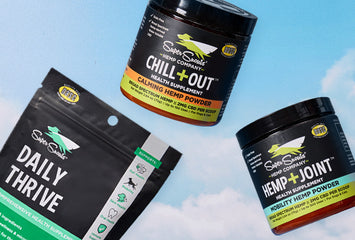
A prebiotic and probiotic supplement can smooth the transition window, which is where nearly all rotation problems show up. G.I. Balance is a source of prebiotic fiber and live strains; started a week before a switch and continued through it, it gives the resident population substrate while it adjusts. Keep it constant across the change so it isn't another variable in play.
The WSAVA nutrition guidelines include a manufacturer-vetting checklist worth applying before any brand enters the rotation at all.
FAQ
How often should I rotate my dog's food?
Every two to three months is a reasonable default for protein rotation within one brand, and every three to six months for full brand changes. More frequent than that leaves too little steady time between transitions to judge whether a food actually suits your dog. Less frequent is perfectly fine too — there's no minimum.
Can I mix two different dog foods permanently instead of rotating?
Yes, and some owners prefer it. Feeding a consistent blend of two complete foods provides steady variety without any transition period. The drawback is diagnostic: if something goes wrong you have two suspects and no clean way to separate them. Blend only foods you've already fed individually without trouble.
My dog gets diarrhea every time I change food. Should I stop rotating?
Probably, at least for now. Consistent upset with every change is a signal about that individual dog, not a training problem to push through. Settle on one food that works, hold it for several months, and if you want variety later, try topper rotation instead of formula changes.
Does rotating food help with picky eaters?
Sometimes the opposite. Dogs who learn that refusing a meal reliably produces a different one become pickier, not less. If pickiness is the concern, fix the routine first — measured meals, fifteen minutes down, nothing offered in between — and consider rotation only once eating is reliable.
Is it safe to rotate between kibble, canned, and raw?
It can be, though it's the most demanding version of rotation because moisture, fat, and bacterial load all change simultaneously. Transition over a full fourteen days, handle raw food with strict hygiene, and be aware that stool appearance differs substantially between formats regardless of how well your dog is doing.