

Dalmatian owners are managing something genuinely unusual in the dog world: a breed with a distinct genetic quirk in how it processes purines, which shapes urinary health and diet decisions for life. Add documented skin sensitivities and the fuel demands of a bred-for-miles endurance athlete, and you have a supplement conversation unlike any other breed's — including some places where the right answer is a water bowl and a vet, not a product.
A breed built to run beside carriages
The Dalmatian is the original coach dog — bred to trot for hours alongside horse-drawn carriages, guarding and keeping pace. That heritage survives in a lean, muscular 45-to-70-pound frame with stamina that embarrasses most jogging humans, plus the iconic spotted coat (born white, spots arrive in weeks). Temperament is smart, watchful, and famously energetic; the AKC's Dalmatian profile doesn't undersell the exercise requirement. Lifespans typically reach 11 to 13 years. Two breed-specific facts belong in every owner's head from day one, and we'll take them in order.
The purine story: why Dalmatian urine chemistry is different
Every Dalmatian carries a genetic variant affecting uric acid metabolism — hyperuricosuria, in the literature — meaning the breed excretes far more uric acid in urine than other dogs. The practical consequence is a documented predisposition to urate crystals and stones, particularly in males, whose narrower anatomy makes an obstruction a true emergency. The research record on Dalmatian hyperuricosuria is deep and unambiguous; this isn't internet folklore.
Here's our straight answer on supplements for this: we don't make a urinary product for Dalmatians, and we're not going to bend a digestive supplement into pretending. Urinary management in this breed is a diet-and-lifestyle protocol you build with your veterinarian:
- Water, aggressively. Dilute urine is the cheapest crystal management there is. Multiple bowls, fountains if they encourage drinking, water added to meals.
- Purine-conscious feeding. Organ meats and certain proteins are purine-heavy; your vet can help you evaluate your dog's diet without protein-starving an athlete.
- Frequent bathroom breaks. Urine that sits, concentrates.
- Know the emergency signs. Straining, dribbling, or a male posturing without producing urine is a drop-everything vet visit.
Any Dalmatian owner should have this conversation with their veterinary team before choosing food, supplements, or treats — it's the breed's foundational health topic, and it's bigger than anything sold in a jar.
Spots, skin, and the itch factor
Dalmatian owners know "Dal crud" — the breed community's nickname for the recurring bumps, staph flare-ups, and itchy skin episodes this short coat puts on display. Atopic tendencies and food-related skin reactions are both represented in the breed's documented history, and the sparse single coat offers skin very little cover from allergens or sun. Bronzing along the back and hive-like bumps after certain foods appear regularly in breed health surveys.
Our framework for skin support in a Dalmatian starts where all our thinking starts: the gut-immune axis. Microbiome balance and immune regulation are increasingly studied partners of skin barrier health, so foundational support means a settled gut and steady immune baseline rather than a topical miracle. Daily beta-glucans from a multi-species mushroom blend — our Super Shrooms combines seven organic varieties — serve that baseline role. Meanwhile, actual flares, bald patches, or chronic itch belong to your veterinarian, who may investigate environmental allergy, food triggers (a conversation that dovetails with the purine one), or secondary infections needing real treatment. Supplements set the table; they don't cook the meal.
Feeding an endurance engine
A properly exercised Dalmatian burns fuel like the athlete it is, and its GI system generally keeps up — this isn't a notoriously fragile-stomached breed. What Dalmatians do experience is the disruption pattern common to high-drive dogs: excitement stress, hard exercise in heat, and enthusiastic scavenging on trail runs all produce transient loose stool. And because diet in this breed gets adjusted around purines, food transitions happen more often than average, each one a chance for the gut to complain.
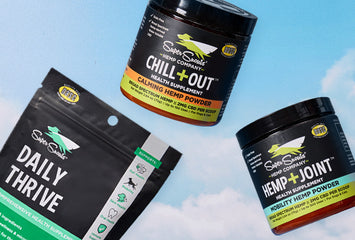
Our toolkit for those moments is deliberately small. Soluble pumpkin fiber — the core of Firm Up! — for stool that's gone soft during transitions or after big exercise days. A probiotic-botanical blend — G.I. Balance — to support gut flora through diet changes your vet prescribes. That's it. Both are supporting players to the main act of consistent, appropriate feeding. Loose stool that outlasts 48 hours, contains blood, or arrives with vomiting or lethargy is clinic material, and in this breed any GI sign paired with urinary straining gets triaged as urgent.
Hearing, briefly, because honesty
Roughly one in five Dalmatians has some degree of congenital deafness — among the highest rates in any breed — and it's linked to the same genetics that produce the white coat. There is no nutritional angle here whatsoever; we mention it because a complete Dalmatian health picture requires it, and because BAER hearing testing through your veterinarian is the responsible response, not any product. When a brand tells you where it can't help, believe the rest of what it says a little more.
The Dalmatian routine, distilled
- Every day: abundant water access, purine-aware feeding per your vet's plan, real exercise (this breed's mental health depends on mileage), and pee breaks that don't make urine wait.
- Foundation, if it fits your dog: mushroom-based immune support for skin-flare-prone individuals, cleared with your vet.
- Situational: pumpkin fiber during diet transitions and after heavy exercise days; probiotic support around vet-directed food changes.
- Annually: urinalysis as part of the wellness exam — cheap, fast, and the single best early-warning tool for the breed's signature issue.
Dalmatian FAQ
Do all Dalmatians need a special low-purine diet?
All Dalmatians carry the uric-acid genetics, but management intensity varies by individual history — dogs with prior crystals need stricter protocols than never-affected dogs. This is genuinely a veterinarian-designed plan, not a shelf-label decision. Annual urinalysis tells you how well the current approach is working.
Can a supplement dissolve or prevent urate stones?
No over-the-counter supplement can honestly claim either, and stone dissolution is a medical procedure involving prescription diets and monitoring. Hydration and vet-guided feeding are your prevention levers. Be wary of any product marketed otherwise.
What's causing the little bumps along my Dalmatian's back?
Could be follicular flare-ups, contact reaction, or food-associated skin response — the breed sees all three, and they look similar from couch distance. A vet visit sorts them out, especially if bumps spread or your dog scratches at them. Foundational gut and immune support can accompany whatever plan results.
Is my Dalmatian's constant water drinking a good sign?
Generally yes — enthusiasm for water works in this breed's favor, and many owners actively encourage it. The exception: a sudden, dramatic increase in thirst warrants a vet check, since it can signal issues well beyond urinary chemistry.
Does hard exercise hurt or help this breed?
Help, overwhelmingly — Dalmatians were engineered for sustained trotting and are healthier, calmer, and happier with daily aerobic work. Build distance gradually, mind hot pavement, and carry water on long outings. An under-exercised Dalmatian is the one with health and behavior problems.
Straight talk to finish
The Dalmatian is a specialist breed with one non-negotiable (urinary chemistry), one manageable tendency (reactive skin), and one glorious feature (the engine). Spend your effort where the science points: water and vet-planned nutrition first, foundational immune and gut support second, and a running habit throughout. We'd rather earn your trust telling you what not to buy — and have you check every choice with your veterinarian — than sell you spots you don't need.