
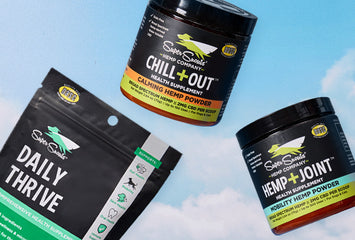

Butyrate is a four-carbon fatty acid made by gut bacteria breaking down fiber, and it's the molecule the cells lining a dog's colon burn first. Those cells — colonocytes — draw an estimated 60% to 70% of their energy from it instead of from blood glucose. Dogs manufacture their own supply internally. Supplements aim to add more, with real trade-offs either way.
Why would a cell prefer butyrate to glucose?
Because of where it sits. Colonocytes face the lumen on one side and the blood supply on the other, and they're positioned right beside the richest butyrate source in the body.
There's an elegant consequence. Colonocytes consume oxygen heavily to metabolize butyrate, which keeps oxygen concentration in the lumen very low. Most beneficial gut anaerobes cannot tolerate oxygen. So the lining, by burning butyrate, maintains precisely the oxygen-poor conditions the bacteria producing that butyrate need in order to keep producing it. The cell feeds the microbes the environment they require, and the microbes feed the cell.
When that loop weakens, oxygen leaks into the lumen and the competitive advantage shifts toward oxygen-tolerant species. Researchers have described this feedback arrangement in some detail, and it's the clearest illustration available of a gut lining and its residents functioning as one system.
How much does a dog actually make in a day?
Enough that supplementation is an adjustment rather than a rescue.
A medium-sized dog on a normal commercial diet produces meaningful quantities of total short-chain fatty acids daily, with butyrate as roughly a fifth of the mix. Nearly all of it is consumed on site — fecal concentrations reflect what's left over, not what was made, which is why fecal numbers understate production considerably.
Production scales with fermentable substrate. Double the useful fiber and you increase output, up to the point where transit time becomes the limiting factor rather than substrate availability. Our overview of the wider short-chain fatty acid family covers where the other two fractions end up.
Can you supplement butyrate directly?
You can, and the form determines whether it arrives anywhere useful.
Uncoated butyrate salts are the cheapest option and the least likely to work, because butyrate is absorbed readily in the stomach and small intestine. Whatever gets taken up early never reaches the tissue that wanted it.
Tributyrin is three butyrate molecules attached to a glycerol backbone. Pancreatic lipase cleaves it further down the tract, releasing butyrate closer to where it belongs, and the intact molecule is largely odorless. It costs more for good reason.
What does butyrate smell like, and why does it matter?
Rancid butter. It's the compound responsible for that smell — the name comes from the Latin for butter — and it's also a major contributor to the odor of vomit and of certain aged cheeses.
This is not a trivial aside. Uncoated butyrate powder is genuinely unpleasant to open, and plenty of dogs refuse food it's been mixed into. Owners who buy the inexpensive version and then discover their dog won't touch dinner have effectively bought nothing.
If you're going the direct route, coated or glyceride forms are worth the premium for palatability alone, before you even get to the delivery question.
Which foods and fibers raise it the most?
Resistant starch leads, then pectins, then moderately fermentable blends.
- Cooked-and-cooled potato, rice, or oats. Cooling gelatinized starch causes retrogradation, converting a portion into a form the small intestine can't digest. Butyrate yield is relatively high.
- Pumpkin and apple pectin. Rapidly and thoroughly fermented, producing a broad short-chain fatty acid mix. Firm Up is a concentrated source of both.
- Green banana or plantain flour. Dense resistant starch, though palatability varies a lot between dogs.
- Beet pulp. Moderate, steady, and already in many commercial foods.
Spreading the source across a meal beats a single large dose. Bacterial populations work continuously, and a steady substrate supply produces a steadier output than one big pulse.
Direct supplement or more fiber — how do you choose?
Fiber first, for nearly everyone.
Fermentable fiber is cheaper, palatable, produces all three short-chain fatty acids rather than one, and supports the microbial population doing the work instead of bypassing it. It also has a self-limiting quality: overdo it and you get gas and loose stool, an obvious signal to back off.
Direct butyrate makes more sense in specific situations — a dog who genuinely won't tolerate added fiber, or one whose veterinarian has recommended it as part of a plan. It is also the only route that works if the bacterial population capable of producing butyrate is depleted, since substrate without fermenters accomplishes nothing.
Talk to the veterinarian managing your dog's care before adding butyrate in any form, particularly if your dog takes daily medication. Sodium butyrate contributes sodium, which is not irrelevant for every patient.
What are the practical downsides?
Three worth naming.
Cost is the obvious one: tributyrin products for a large dog can run meaningfully more per month than a fiber supplement doing similar work. Palatability is the second, and it defeats more attempts than anything else. And measurement is the third — there's no practical home test for whether a butyrate supplement is reaching the colon, so you're judging by stool quality and general appearance rather than by data.
There's also a dosing gap. Canine dosing recommendations are extrapolated largely from swine and poultry nutrition, where the economics justified the research. Label directions on pet products vary widely, which should tell you how firm the underlying evidence is. Regulatory oversight of supplement claims is limited, and the FDA's overview of pet supplement regulation is worth understanding before spending.
FAQ
How long does butyrate supplementation take to show an effect?
If you're going to notice anything, stool quality usually shifts within two to four weeks. Give it a full eight weeks before deciding, and keep written notes on consistency and frequency — memory is unreliable across that span and gradual change is exactly the kind people fail to perceive.
Is sodium butyrate safe for dogs long-term?
It has been fed safely in livestock for years and appears well tolerated in dogs at label doses. The sodium load is the piece worth flagging for dogs on sodium-restricted diets. Long-duration canine safety studies are limited, which argues for conservative dosing and periodic reassessment rather than indefinite use on autopilot.
Can I make butyrate at home by cooling rice?
Sort of — you can raise the resistant starch content, which gives gut bacteria more of the substrate they convert into butyrate. Cook the rice, refrigerate it overnight, and serve it cold or gently rewarmed. It's a genuine effect, though modest, and it's free.
Do butyrate supplements interfere with probiotics?
No mechanism suggests they would, and the two are sometimes combined in one product. Butyrate lowers luminal pH slightly, which if anything suits most beneficial anaerobes. Introduce them a week or so apart so you can tell which one is responsible for whatever you observe.
Why is butyrate concentration low in my dog's stool test?
Because most of what gets produced is consumed by the colon lining before it exits. A fecal measurement captures the surplus, not the output, so a low number can reflect efficient uptake just as easily as low production. This ambiguity is a real limitation of fecal metabolite testing and a reason not to over-read a single result.