
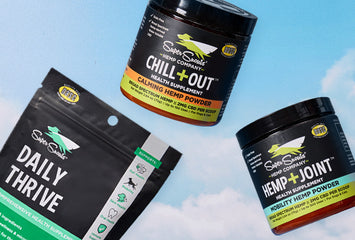

All three are mild toppers most dogs tolerate, but they solve different problems. Bone broth is largely water carrying collagen, gelatin, and minerals, which makes it a hydrator and an appetite nudge. Goat milk brings fat, some lactose, and live cultures if it's raw or fermented. Pumpkin brings soluble fiber and moisture with almost no fat. Choose by goal: hydration, palatability, or stool consistency. Trying all three at once tells you nothing.
Pick one and only one to start
Owners tend to add everything on the same night, then wonder which change caused what. Introduce a single topper, hold the rest of the diet steady, and watch for four or five days.
Boring, but it's the only way to get an answer.
Bone broth: what's really in the cup
Simmered bones and connective tissue release gelatin, which is why a good broth turns to jelly when chilled. Along with that come small amounts of glycine, proline, and trace minerals.
Protein and calories both come in low. What a dog really gets from broth is fluid in a form they'll willingly drink, which matters more than it sounds for a dog who ignores the water bowl.
The broth aisle problem
Human broths and stocks are often built on onion and garlic, and the sodium can be considerable. Both alliums are on the standard avoid list for dogs.
Read the panel or make your own. Homemade is unglamorous: bones, water, a long simmer, skim the fat, no seasoning. Strain out every bone fragment, because cooked bone splinters.
Goat milk: fat, lactose, and cultures
Goat milk has smaller fat globules than cow milk and slightly less lactose, which is the usual argument for it. Slightly less is not the same as none.
Raw and fermented versions carry live bacteria, which is where the probiotic framing comes from. Pasteurized goat milk does not. If cultures are the reason you're buying it, check whether the label actually claims them.
Calories add up faster than you'd think
Goat milk is the fattiest option here by a wide margin. A quarter cup poured over dinner for a 20-pound dog is a real addition to the day's intake, not a garnish.
Broth sits at the low end, and plain pumpkin is low too. For a dog on a weight plan, that ordering matters.
Pumpkin: fiber first
Cooked, unseasoned pumpkin is the only one of the three that delivers meaningful soluble fiber, which absorbs water and slows things through the intestine. The AKC's explainer on fiber and why dogs need it is a decent primer on how the soluble and insoluble types behave differently.
Canned pumpkin is bulky because of its water content. A concentrated pumpkin-based option like Firm Up exists as a source of that same soluble fiber without a half-cup of squash on top of dinner.
The comparison
For the dog who won't eat
Warm broth usually wins. Aroma does the work, and a savory splash over kibble often restarts a stalled meal.
Goat milk is the runner-up and tends to be the more effective bribe for young dogs. Pumpkin rarely tempts anybody.
For loose stool
Fiber is the relevant tool, so pumpkin is the obvious pick. Broth adds fluid, which is helpful when a dog has lost some, but it won't firm anything up. Goat milk can make things worse, since extra fat and lactose are not what an irritated gut wants.
Anything that persists beyond a day or two, or that comes with lethargy, blood, or a tender belly, needs a veterinary exam rather than a topper.
For a senior with a small appetite
Older dogs often eat better with moisture and warmth in the bowl. A little broth stirred in, or pumpkin thinned with warm water, changes the texture without changing the formula they're used to.
Talk to whoever manages your dog's care before layering add-ins onto a senior's diet, particularly if kidney or heart values are being monitored, since sodium and phosphorus both come into play.
How to introduce any of the three
Start with roughly a teaspoon for a small dog, a tablespoon for a medium one, two for a large dog. Hold that for three days.
If everything looks normal, you can go up modestly. If it doesn't, drop back. A topper that causes the problem you were trying to solve is not a mystery worth investigating twice.
Rough daily ceilings by weight
Under 20 pounds: an ounce or two of broth, a tablespoon of goat milk, a teaspoon of pumpkin. Twenty to 50 pounds: roughly double that. Over 50 pounds: a quarter to half cup of broth, two to four tablespoons of milk, one to two tablespoons of pumpkin.
If your dog is being managed for anything at all, run those amounts past your clinic before you start pouring. Treat them as ceilings, not targets. Toppers should stay a small slice of total intake so the complete diet underneath keeps doing its job; the FDA's plain-language explanation of complete and balanced pet food covers why that matters.
When add-ins aren't the answer
A topper changes moisture, aroma, fat, or fiber. It doesn't address parasites, food sensitivity, dental pain, pancreatic issues, or anything else that requires a diagnosis.
If you're reaching for a third add-in in a month because nothing has stuck, the pattern itself is the signal. Book the appointment and bring the labels of everything you've tried. The WSAVA global nutrition guidelines are the framework many clinics use when reviewing a diet, and the rest of the Super Snouts catalog can wait until you have direction.
FAQ
Is goat milk better than cow milk for dogs?
It's usually easier on dogs because of lower lactose and smaller fat globules, though "easier" isn't "free." Dogs with real dairy sensitivity react to both. Start with a spoonful and watch.
Can I give bone broth every day?
Plenty of owners do, using an unsalted, allium-free version in modest amounts. Keep it under about ten percent of daily calories and count it as food, not water. Dogs with sodium restrictions need a vet's input first.
How much pumpkin for a 40-pound dog?
A tablespoon a day, split between meals, is a normal starting point. Give it a few days before deciding whether to nudge it up.
Can I mix all three together?
Physically, sure. Diagnostically it's a mess, since you lose track of what helped. Run them separately first.
Do any of these replace a meal?
No. None of the three is complete or balanced, and none should be a stand-in for food. A dog who refuses meals for more than a day needs to be seen.