

The compound class that makes medicinal mushrooms immune-active. Here's what they are and how they work.
When you read about medicinal mushrooms for dogs, beta-glucans are the active compound class everyone refers to. But what they actually are, how they work, and which mushrooms have the most useful profiles isn't always clearly explained.
Most chronic problems started as small ones the body told you about quietly. Here's a working overview of beta-glucans — the mushroom-derived compounds that make this whole category interesting.
What beta-glucans are
Beta-glucans are polysaccharides — long chains of glucose molecules linked together with specific bonds (β-1,3 and β-1,6 linkages).
Found in mushroom cell walls, certain yeast cell walls, oats, and barley. The mushroom and yeast versions have particular immune-active properties.
How they interact with the immune system
Beta-glucans bind specific receptors on innate immune cells — particularly macrophages, neutrophils, and dendritic cells. The receptor most studied is Dectin-1.
Binding activates these cells, increasing their ability to recognize and respond to pathogens. The effect is described as 'immune modulation' — primarily upregulating innate immune function.
The 'modulation' rather than 'boost' framing
Beta-glucans don't simply 'boost' immunity in a directional sense. They prime innate immune cells to respond more effectively when needed.
Importantly, they appear to modulate rather than over-activate — meaning the immune system becomes more responsive to actual threats without becoming inappropriately reactive to harmless inputs.
The evidence base
Beta-glucans have been studied extensively in human research for decades — initially in oncology (turkey tail-derived PSK in Japan) and increasingly in general immune support.
Veterinary research is more recent but growing. Studies in dogs show measurable effects on immune cell function, response to vaccination, and clinical outcomes in some conditions.
Which mushrooms have the most beta-glucan
Turkey tail (Trametes versicolor): highest concentration of well-studied beta-glucan compounds.
Reishi (Ganoderma lucidum): substantial beta-glucan content plus other immune-active compounds like triterpenes.
Shiitake (Lentinula edodes): rich in lentinan, a specific beta-glucan with research in cancer support.
Maitake (Grifola frondosa): contains MD-fraction, a specific beta-glucan studied for immune effects.
Other species (lion's mane, cordyceps, chaga) contain beta-glucans alongside other distinctive compounds.
Why blends often outperform single species
Different mushrooms have different beta-glucan structures — different chain lengths, branching patterns, and ratios of β-1,3 to β-1,6 linkages.
Different structures bind immune receptors with different affinities and produce somewhat different effects. A blend covers more of the receptor activation pattern.
This is the rationale for multi-mushroom products: broader coverage of immune-active compounds in one daily input.
Extraction matters
Beta-glucans are concentrated in mushroom cell walls (made of chitin, similar to crustacean shells). Cell walls must be broken to release the active compounds.
Hot water extraction is the standard. Some products use additional alcohol extraction for triterpenes. The extraction method affects bioavailability.
Raw mushroom powder (no extraction) has lower bioavailability than properly extracted products.
Dosing
Typical daily doses range from 50-200 mg per 10 pounds of body weight depending on the specific product and beta-glucan concentration.
Products vary widely in beta-glucan content per gram. Read labels — the mass of the supplement is less important than the beta-glucan content.
How long until effects appear
Beta-glucans work as steady daily inputs over weeks to months. Effects on immune function are measurable in laboratory studies within days, but clinical benefits typically require sustained use.
8-12 weeks of consistent use is the typical timeframe for evaluating clinical effects.
Pairings that work
Beta-glucans + vitamin D: complementary immune-modulating effects.
Beta-glucans + omega-3s: address different aspects of inflammatory regulation.
Beta-glucans + probiotics: complementary support of innate immunity through different mechanisms.
Cautions
Generally well-tolerated. Significant side effects are rare at standard doses.
Dogs on immunosuppressive therapy (for autoimmune disease or post-transplant) should not take beta-glucans without vet guidance — the immune-activating effects could counter the therapy.
Theoretical interactions with anticoagulants exist; discuss with vet if your dog is on blood thinners.
Common questions about beta-glucans
Can my dog get them from food? Mushrooms in food provide some beta-glucans but at much lower concentrations than supplementation. Oats and barley contribute oat-derived beta-glucans with different structure.
Are they safe long-term? Standard daily doses appear safe in long-term studies and clinical use.
Why not just eat mushrooms? Bioavailability — supplements use extracted, concentrated forms.
Will beta-glucans help with cancer? The cancer-related research is mixed. Some studies show benefit as adjunctive therapy. Discuss with vet.
What to track at home
Frequency of minor illnesses across 6-12 months of consistent supplementation.
Recovery time from any infections.
Overall energy and resilience metrics.
Where our formulas fit
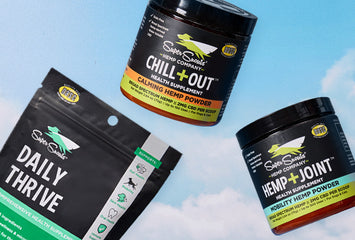
For owners looking for a broad-spectrum beta-glucan input, a multi-mushroom blend is one of the more interesting daily options. For daily immune support, owners looking at the mushroom category often run into single-species products and have to choose. Super Shrooms collapses that decision — seven species in one daily scoop, each contributing different beta-glucan profiles.
Related reading
The bottom line
Owners sometimes worry they're missing something exotic. Almost always, what they're missing is consistency on the basics. The exotic stuff rarely beats the basics done well over time.